


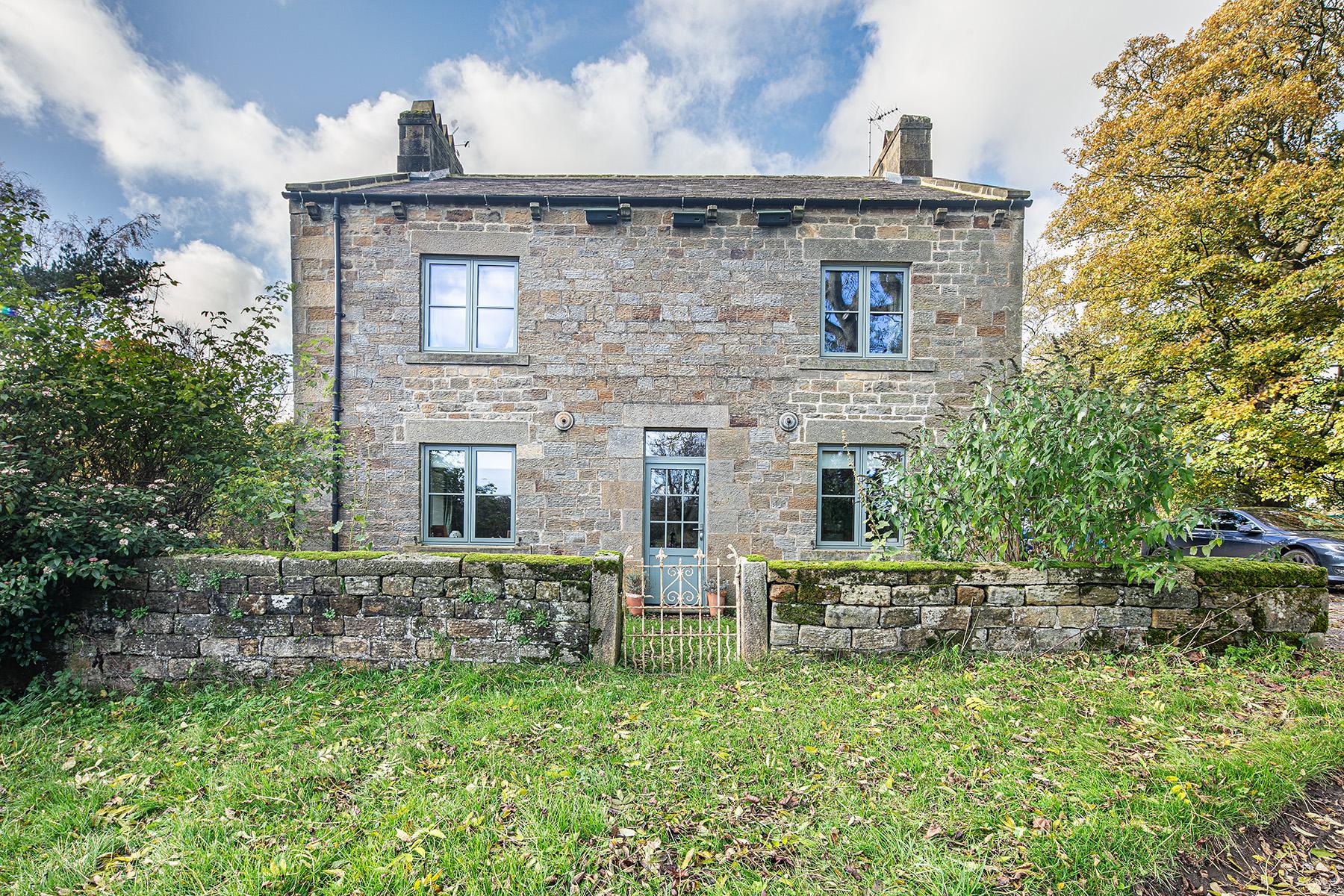
A triple glazed window is a three-pane glazing unit with two insulating cavities, typically filled with argon gas and featuring low-emissivity coatings, designed to achieve whole-window U-values significantly below those achievable with double glazing.
Replacing windows is often one of the most visible decisions in a renovation – and one of the most discussed. But for many retrofit projects, glazing specification sits downstream of broader questions about fabric, budget, and building context.
This article sets out when triple glazing genuinely earns its place in a renovation, when high-performance double glazing may serve the project better, and what factors consistently shape that decision across different project types.
Starting with the fabric, not the product
Windows account for a meaningful share of heat loss – 20–25% in a typical UK home – but they sit within a wider thermal envelope. Walls, roofs, floors, and junctions together account for the majority of a building’s energy performance. Upgrading glazing without addressing those elements can improve comfort at the margins, but it is unlikely to transform a building’s energy behaviour.
The practical implication is straightforward: a higher-performing window is most valuable when the rest of the envelope is performing well. In a well-insulated, reasonably airtight home, triple glazing delivers the comfort and efficiency improvements its specification promises. In a building with poor fabric and significant heat loss, those improvements are partially compromised.
This is why fabric-first thinking underpins the most successful retrofits – including Passive House-informed projects built to EnerPHit standard, where insulation, airtightness, and fenestration are specified as an integrated system rather than a sequence of individual upgrades.
When triple glazing makes sense in a retrofit
Several project conditions make triple glazing the appropriate choice, and often the only viable one:
- Deep retrofits and major renovations. When a project is already stripping back to structure – replacing insulation, addressing airtightness, upgrading heating and ventilation – the incremental cost of triple over double glazing is modest in context. The performance return, measured in comfort, condensation reduction, and lower heating demand, is proportionately significant.
- Passive House-informed and near-Passive House targets. For projects following Passive House retrofit principles and pursuing EnerPHit certification, window Uw values of 0.80 W/m²K or below are typically required – or a space heating demand of 20-30kWh/m²/year under the energy demand method. Either route requires glazing performance that standard double glazing cannot reliably achieve.
- Exposed locations and cold-facing elevations. North-facing façades, coastal sites, and upland locations see greater heating demand through windows. Higher-performance glazing delivers proportionately greater benefit in these conditions.
- Large glazed areas. Projects with significant window-to-wall ratios – open-plan extensions, highly glazed ground floors – benefit more from per-unit performance gains than modest domestic openings. The aggregate heat loss through poorly performing large-format glazing is substantial.
It is also worth noting the cost context. The thermal performance uplift from double to triple glazing is typically 40–45%, while the price premium is usually in the region of 10–15% when comparing equivalent-quality products. That is a reasonable investment in most renovation programmes, particularly when windows are being replaced anyway.
When double glazing may be sufficient
Triple glazing is not always the most appropriate specification. A well-designed double-glazed unit with warm-edge spacers, Low-E coating, and argon fill can achieve whole-window Uw values of 1.0–1.3 W/m²K – sufficient for many renovation projects targeting compliance with Part L without pursuing deeper performance targets.
Double glazing may be the right call where: the renovation scope is light-touch; the existing fabric remains largely unimproved; heritage or planning constraints limit opening depth or reveal dimensions; or budget is better directed toward wall insulation or airtightness improvements that will deliver greater whole-building performance return.
It is also worth distinguishing between comfort performance and compliance. Minimum Part L thresholds represent a regulatory floor, not a comfort benchmark. A window that passes the assessment may still produce cold spots and condensation risk in colder months. That distinction is worth discussing with whoever is specifying the project.
Installation quality and the reveal: often the overlooked factor
Product specification and installed performance are not the same thing. A well-specified triple-glazed unit installed with poor reveal detailing – set back into a reveal without insulation continuity, or with poor airtightness sealing around the frame – will underperform relative to its certified data. The linear thermal bridge at the window-to-wall junction (the Ψ-installation value) adds meaningfully to heat loss calculations in PHPP and SAP, particularly in high-performance retrofits.
Best-practice installation in deep retrofit positions the window frame within or at the face of the insulation layer, minimising junction thermal bridging and maintaining continuity between frame and wall performance. This is an important process regardless of whether double or triple glazing is specified: detailing and workmanship remain the specifier’s responsibility.
Airtightness and ventilation: the paired consideration
Higher-performance windows contribute to improved airtightness through better sealing: multi-point locking systems, compression gaskets, and better frame-to-reveal details all reduce uncontrolled air infiltration. In a building that is upgrading its envelope significantly, this is a meaningful benefit. But it brings a paired consideration: reduced infiltration means reduced background ventilation.
Any project that meaningfully improves airtightness should incorporate a deliberate ventilation strategy. MVHR (mechanical ventilation with heat recovery) is the most common approach in high-performance retrofits, and the most compatible with the energy ambitions that typically motivate a significant glazing upgrade. MEV (mechanical extract ventilation) is equally compliant under the Future Homes Standard framework and may suit projects where MVHR installation is impractical.
Improving windows without considering ventilation is not inherently problematic in most renovations, but it is a dependency worth building into the brief early.
Heritage properties and planning constraints
Conservation area restrictions and listed building consent requirements may influence what is achievable. In sensitive contexts, conservation officers may require like-for-like replacement or specific visual profiles, which can constrain reveal depth and frame geometry.
Where replacement is approved, high-performance triple glazing is a compatible option with traditional buildings. Slimmer-profile timber frames, decorative glazing bars, and traditional hardware options can preserve the visual character of a heritage property while delivering a significant thermal improvement. It’s worth initiating a pre-application conversation with the local planning authority to clarify what is achievable before specification begins.
Specification that fits the project
There is no single answer to whether triple glazing makes sense in a renovation. The question is best answered in context: what are the performance targets, what is happening to the rest of the envelope, what are the planning constraints, and where does glazing sit in the budget hierarchy?
For projects pursuing low-energy or Passive House performance, triple glazing is not optional: it is necessary. For lighter renovations without significant fabric improvement, high-specification double glazing may serve the project better at lower cost and disruption.
What matters in both cases is that the glazing decision is made as part of a considered retrofit strategy rather than in isolation, and that installation quality receives the same attention as product specification.
Explore Norrsken’s full range of triple glazed windows, or speak to our technical team to discuss your specific retrofit context.
Frequently Asked Questions
Is triple glazing worth it when replacing windows in an older home?
It depends on the wider retrofit scope. In an older home being substantially improved with better insulation, draught-proofing, and a ventilation strategy, triple glazing delivers meaningful comfort and efficiency gains. In a light-touch renovation where walls and roof remain unimproved, high-specification double glazing may offer a better return on the glazing budget. The key question is whether the rest of the envelope will allow the window to perform to its potential.
What U-value should replacement windows achieve in a UK retrofit?
Part L (England) sets minimum performance thresholds for replacement windows in existing dwellings, currently 1.4 W/m²K for the whole window. For EnerPHit projects, the required Uw varies by UK climate zone under PHPP V9: 0.85 W/m²K for Cool-Temperate (most of the UK), 0.65 W/m²K for Cold (parts of northern England and Scotland), and 1.05 W/m²K for Warm-Temperate (London and the South West). For Passive House new builds, the threshold is typically 0.80 W/m²K or below.
Does triple glazing cause overheating in existing homes?
Triple glazing itself does not cause overheating, but glazing specification – particularly g-value (solar transmittance) – interacts with orientation, shading, and thermal mass to influence summer temperatures. High-performance triple-glazed units typically have lower g-values than double-glazed equivalents, which reduces passive solar gain. On south-facing or heavily glazed elevations, this needs to be modelled alongside Part O overheating compliance requirements, particularly in new extensions. Solar control glass options can help balance winter heat retention against summer comfort.
Can I install triple glazing in a Victorian or solid wall house?
In most cases, yes – but with considerations. Triple-glazed units are heavier than double-glazed equivalents, so lintels and sub-frames should be assessed, particularly in pre-1919 construction. Reveal depth is also a factor: deeper frames may affect the reveal finish and internal window board. In listed buildings or conservation areas, planning consent may be required and secondary glazing may be the more practical route. Where replacement is permitted, bespoke slim-profile frames can maintain traditional character alongside modern thermal performance.
How does window installation affect performance in a retrofit?
Installation quality significantly affects delivered performance. Even a correctly specified unit will underperform if installed without airtightness sealing around the frame or with inadequate insulation at the reveal junction. The linear thermal bridge at the window-to-wall junction (the Ψ-installation value) contributes to heat loss calculations in PHPP and SAP. Best practice in high-performance retrofits positions the window frame within the insulation layer, minimising this bridge. Workmanship and detailing should be discussed with the installer at specification stage, not after.