


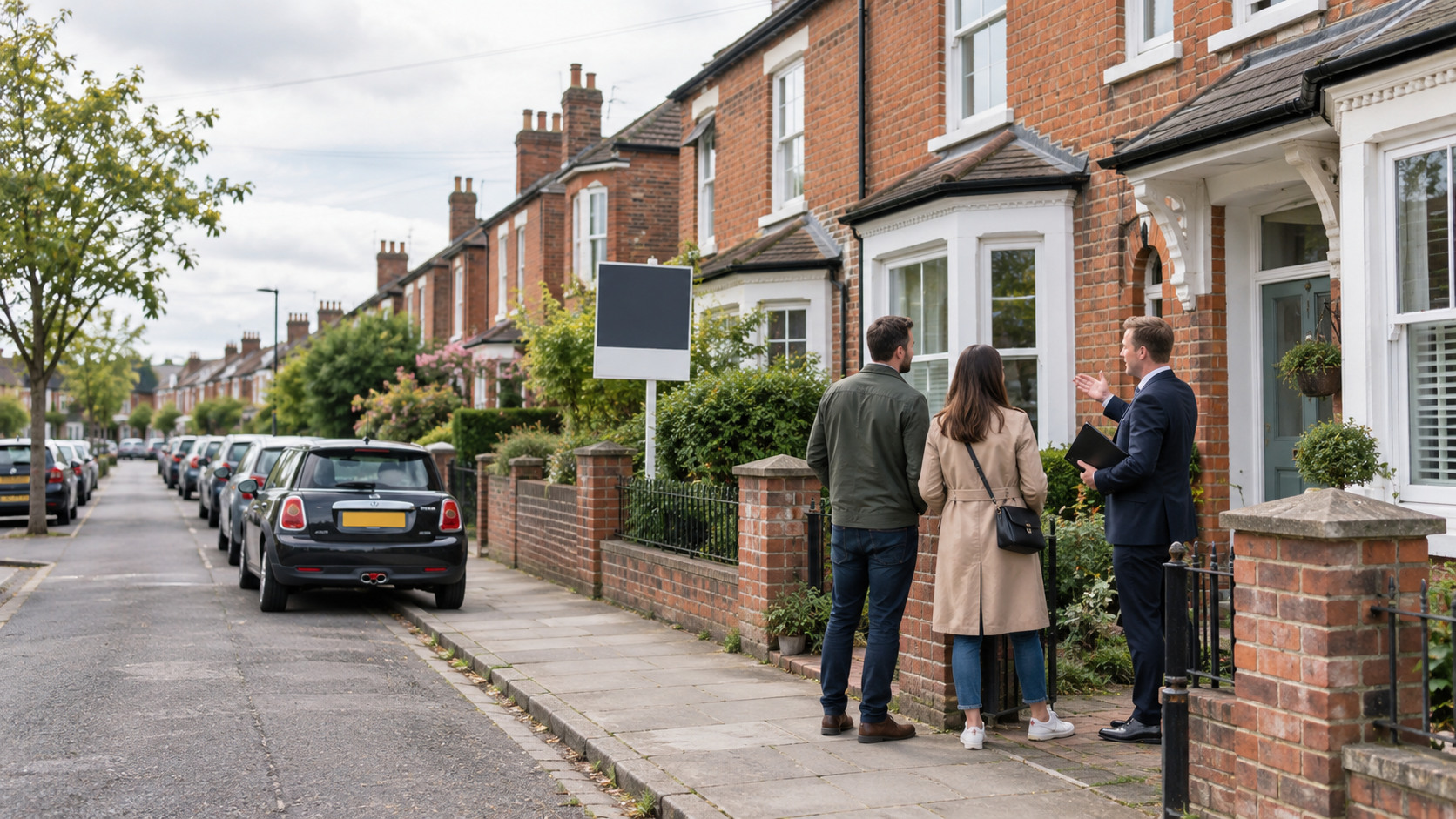
UK buyer demand showed signs of improvement in August, offering cautious encouragement after a difficult period for the housing market. Estate agents and surveyors reported that interest from prospective buyers remained below normal levels, but the decline was less severe than in previous months.
The latest findings do not suggest that the property market has entered a strong recovery. Mortgage costs remain elevated, affordability is stretched, and regional differences continue to shape prices and activity. However, the figures indicate that the slowdown may be starting to stabilise.
UK Buyer Demand Reaches Its Strongest Level Since January
The latest Royal Institution of Chartered Surveyors data showed that new buyer enquiries recorded a net balance of -19% in August. While the figure remained negative, it was the strongest reading since January and continued the gradual improvement seen over recent months.
A negative balance means more surveyors reported a decline than an increase. Therefore, the figures should not be interpreted as a sudden surge in demand. They instead suggest that the number of professionals reporting weaker conditions is beginning to fall.
According to the latest UK housing market report, agreed sales and buyer enquiries both showed signs of improvement, although the overall market remained fragile.
This is an important distinction. A stabilising market can still experience falling prices or weak transaction levels. It simply means that the pace of deterioration may be easing.
Why Is UK Buyer Demand Beginning to Improve?
Several factors may be encouraging prospective buyers to restart their property searches. Some households delayed their plans earlier in the year because of mortgage uncertainty, economic concerns, and expectations that prices could fall further.
As the summer period ends, buyers who paused their searches may now be reviewing available properties again. The early autumn market also tends to bring more listings and activity as households aim to complete transactions before the end of the year.
Higher Borrowing Costs Continue to Shape Buyer Demand
Mortgage rates remain a major affordability challenge, but buyers may be becoming more realistic about current borrowing conditions. Rather than waiting indefinitely for significantly lower rates, some households are adjusting their budgets, considering less expensive locations, or increasing their deposits.
Anyone preparing to purchase a home should compare monthly repayments across different products. PAD’s guide to UK mortgage rates in 2026 explains the factors affecting borrowing costs and the practical steps applicants can take.
Sellers Are Facing More Price-Sensitive UK Buyers
Improving interest does not mean sellers can disregard affordability pressures. Buyers have access to detailed local pricing information and may be unwilling to pay above comparable market values.
Homes that are realistically priced and presented well are more likely to attract viewings. Properties with ambitious asking prices may remain available for longer, particularly in areas where supply is increasing.
How UK Buyer Demand Relates to House Prices
The latest indicators present a mixed picture. RICS reported that its house-price balance improved to a five-month high, but it remained firmly negative. Separate data recently showed that UK house prices fell annually for the first time in nearly three years.
These findings are not necessarily contradictory. Market surveys measure different areas and use different methods. One report may track professional sentiment, while another measures mortgage-approved transactions or average property values.
It is therefore more accurate to say that conditions may be stabilising rather than claiming that prices have entered a nationwide recovery.
Regional Buyer Demand Remains Uneven
The UK does not operate as one uniform housing market. Buyer affordability, employment conditions, housing supply, and average property values vary considerably between regions.
Areas with lower average prices may continue to attract households seeking better value. More expensive parts of London and southern England may face greater pressure when mortgage rates rise because borrowers require larger loans.
Local conditions should therefore carry more weight than national averages when buyers and sellers make decisions.
What Could Change UK Buyer Demand and the Housing Market Outlook?
The next stage of the market will depend heavily on mortgage pricing, inflation, consumer confidence, and the wider economy.
Bank of England Interest-Rate Decisions
The Bank of England’s decisions influence lenders’ funding expectations, although fixed mortgage rates do not always move immediately or by the same amount as the Bank Rate.
A reduction in borrowing costs could bring more buyers into the market and improve affordability. However, uncertainty around inflation may keep mortgage pricing volatile. PAD’s analysis of the Bank of England September decision explains what changing rate expectations could mean for mortgages and property prices.
The Number of Homes Available for Sale
An increase in available properties gives buyers more choice and can reduce pressure to make rushed offers. Sellers may need to compete more carefully on price, condition, and presentation.
If supply remains limited in a desirable location, well-priced homes can still attract strong interest even when national demand appears weak.
Employment and Household Confidence
Most people will avoid making a major financial commitment if they are concerned about their income or employment. Greater economic stability could support transactions, while weaker employment conditions would make buyers more cautious.
What Improving UK Buyer Demand Means for Buyers
A gradual increase in UK buyer demand may create more competition for accurately priced homes. However, buyers should not feel pressured into exceeding their budgets.
Before submitting an offer, buyers should:
- Obtain a mortgage agreement in principle.
- Review the property’s recent local sales evidence.
- Calculate repayments at different interest rates.
- Budget for surveys, legal fees, moving costs, and repairs.
- Avoid using their full borrowing limit without an emergency reserve.
First-time purchasers can also review what first-time homebuyers should consider before making an offer.
What Improving Buyer Demand Means for Sellers
Sellers may welcome signs that more people are entering the market, but realistic pricing remains essential. An asking price based on older market conditions can discourage viewings and lead to repeated reductions later.
The first few weeks after listing are particularly important because this is when a property usually receives the most attention. Clear photographs, accurate details, and a sensible asking price can help convert online interest into viewings.
Sellers should also prepare the necessary documents early. Delays involving title information, leasehold paperwork, or property forms can slow a transaction after an offer has been accepted.
Frequently Asked Questions About UK Buyer Demand
Is UK Buyer Demand Showing a Housing Market Recovery?
The market is showing early signs of stabilisation, but it is too soon to describe this as a strong recovery. Buyer enquiries have improved, although demand, sales, and price indicators remain subdued.
Will UK House Prices Rise in 2026?
Performance will depend on the region, mortgage rates, supply, and economic conditions. Some areas may record growth while more expensive markets remain under pressure.
Is Now a Good Time to Buy a House?
That depends on the buyer’s finances, deposit, mortgage options, and long-term plans. Buyers should focus on affordability rather than trying to predict the exact bottom of the market.
Will Lower Interest Rates Increase UK Buyer Demand?
Lower borrowing costs would generally improve affordability and could increase demand. However, lenders also consider swap rates, inflation expectations, competition, and individual applicant risk.
UK Buyer Demand Is Improving, but Recovery Remains Gradual
The improvement in UK buyer demand is a positive development after months of weak activity. It suggests that some households are returning to the market and that the downturn may be losing momentum.
Nevertheless, the recovery remains uncertain. Mortgage affordability is still challenging, price trends vary between regions, and many buyers remain cautious.
For now, buyers and sellers should view the latest figures as evidence of gradual stabilisation rather than the beginning of a rapid property boom.

