


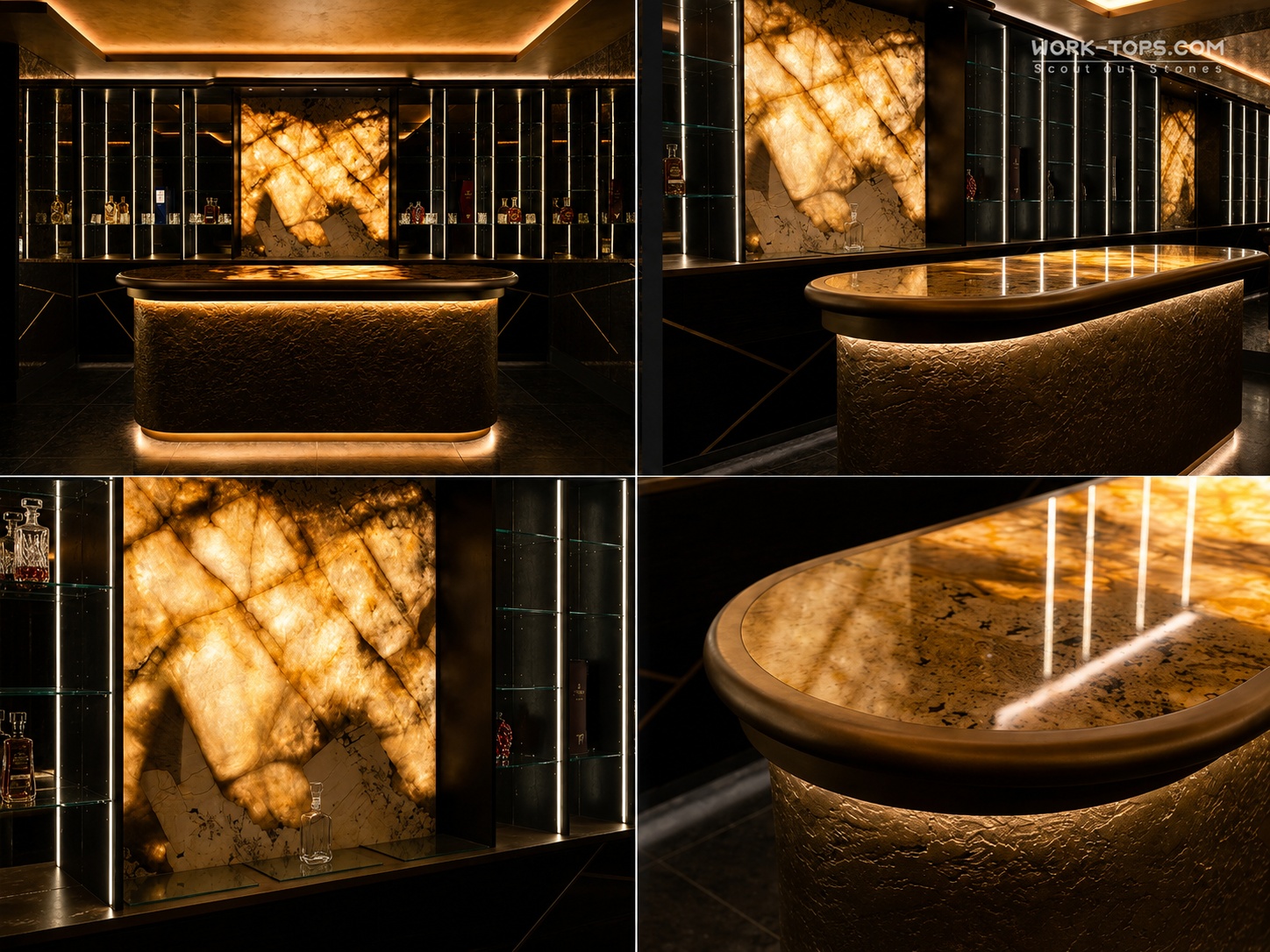
After a decade spent working with natural and engineered stone, we have learned one thing above everything else: choosing a slab is not just about picking the colour you like. It is about understanding the character hidden inside the stone. Every block has its own story, from the way the crystals form deep beneath the earth to how the light travels through a vein and how the material reacts when it reaches the cutting bench.
In 2026, we are seeing a significant rise in demand for statement stones, particularly Patagonia Quartzite, Cristallo Quartzite, Taj Mahal Quartzite, and exotic marbles with dramatic veining. These materials are no longer being used only for worktops; designers are specifying them for full-height splashbacks, fireplace surrounds, bathroom walls, bar areas, and even illuminated feature panels where the natural translucency of the stone becomes the centrepiece of the room.
Patagonia Quartzite has become one of the standout choices among homeowners looking for something truly unique. Its combination of deep mineral patterns, contrasting colours, and semi-translucent qualities makes it ideal for backlighting. However, what many homeowners do not realise is that these slabs are not simply “expensive pieces of stone”; they require careful sourcing, specialist handling, and skilled fabrication. A single slab can often range from £2,000 to £8,000+ depending on size, origin, quality, and availability, with premium bookmatched or rare blocks reaching significantly higher.
The same applies to Exotic Marbles. While many associate marble with luxury, not all marble performs the same way. Softer marbles require a different approach from fabrication to daily maintenance. A beautiful vein pattern may come with natural characteristics such as movement, fissures, or mineral variation, features that make the stone unique but require an experienced eye during selection and installation.
One of the biggest lessons we have learned at the bench is this: the best slab is not always the most expensive one. It is the one that matches the project, the lifestyle, and the craftsmanship required to bring it to life.
Quartzite vs Marble: What’s Actually Happening in the Stone
Quartzite starts life as sandstone, then gets cooked and compressed deep underground until the quartz grains fuse together into something genuinely tough, hard enough to shrug off a knife blade, resistant to UV fading, and largely unbothered by the acids in your kitchen. Marble, by contrast, is metamorphosed limestone, softer, more reactive, and prone to that dulled, cloudy “etch” mark the moment lemon juice or wine sits on it for too long.
The confusion in the trade is real, though. A huge share of what gets sold as “soft quartzite” on the high street is actually dolomitic marble wearing a more fashionable name. My advice, every time: ask your fabricator for a genuine hardness test, or do the lemon-wedge trick yourself on an offcut. True quartzite won’t dull. If it etches, you’re holding dolomitic marble, and that’s fine: just go in with your eyes open.
The Research Happening Right Now, in 2026

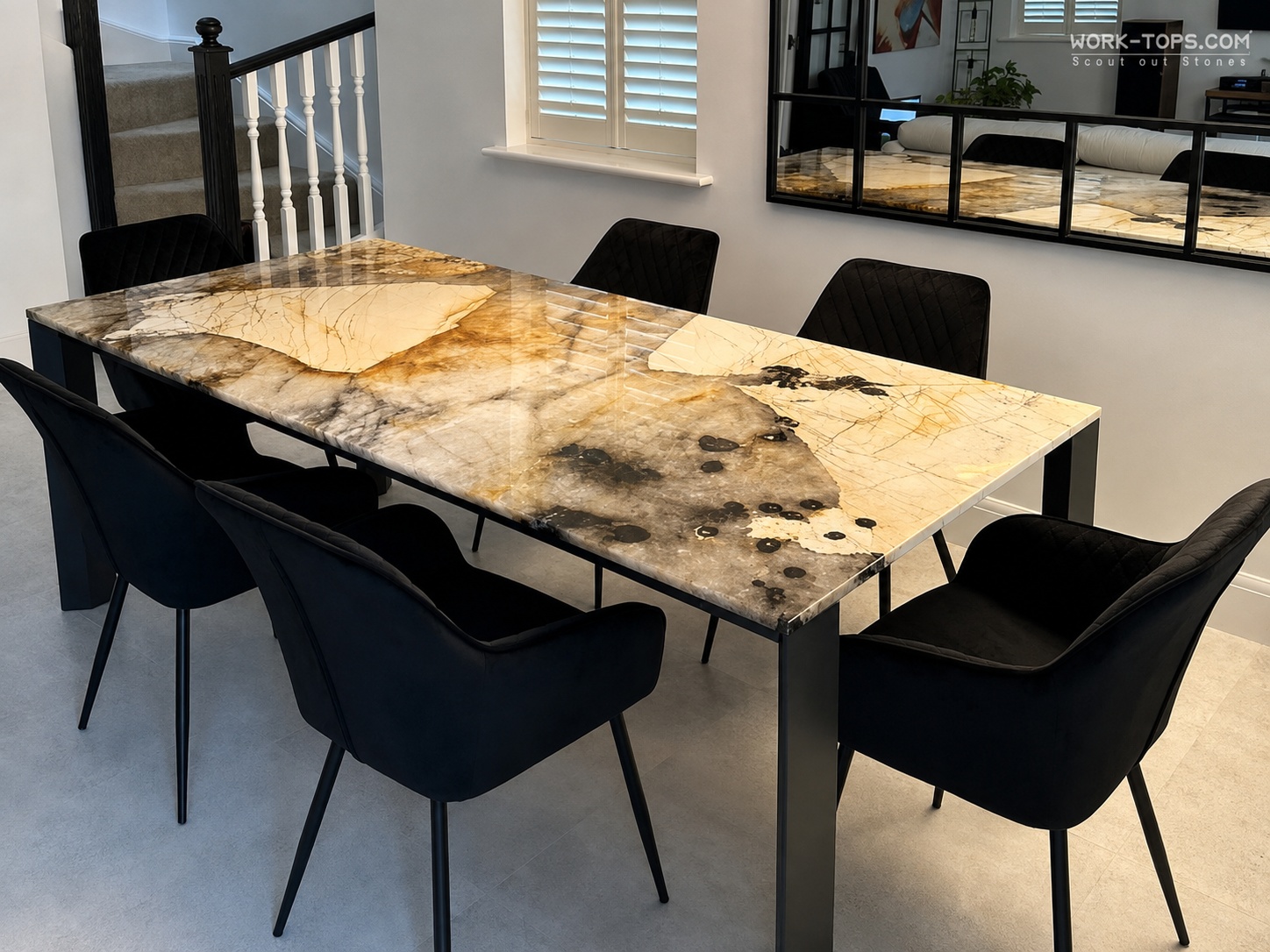
This isn’t a static industry. A few things worth knowing if you’re specifying stone this year:
- Bold, characterful veining is out-trending flat, uniform slabs: Designers are actively seeking quartzites with dramatic, one-of-a-kind movement — stones like Taj Mahal and Cristallo remain benchmark choices for exactly this reason, prized for combining marble-like elegance with far greater day-to-day resilience.
- Colour-wise, warmth is winning: The cool, stark greys that dominated the last few years are giving ground to honey, caramel, and soft gold tones alongside a genuine surge in blue-grey “Blue Roma Quartzite” style quartzites for kitchens that want a quieter, more coastal feel.
- Performance data is getting more granular: Fabricators and designers are increasingly benchmarking stone not just on looks but also on measurable thresholds, heat tolerance, real-world abrasion resistance, and how porosity actually behaves in daily use, rather than relying on marketing claims.
- Sealing science is improving: New impregnating and topical sealants are extending realistic maintenance intervals, with some products now rated for multi-year protection rather than the old annual reseal.
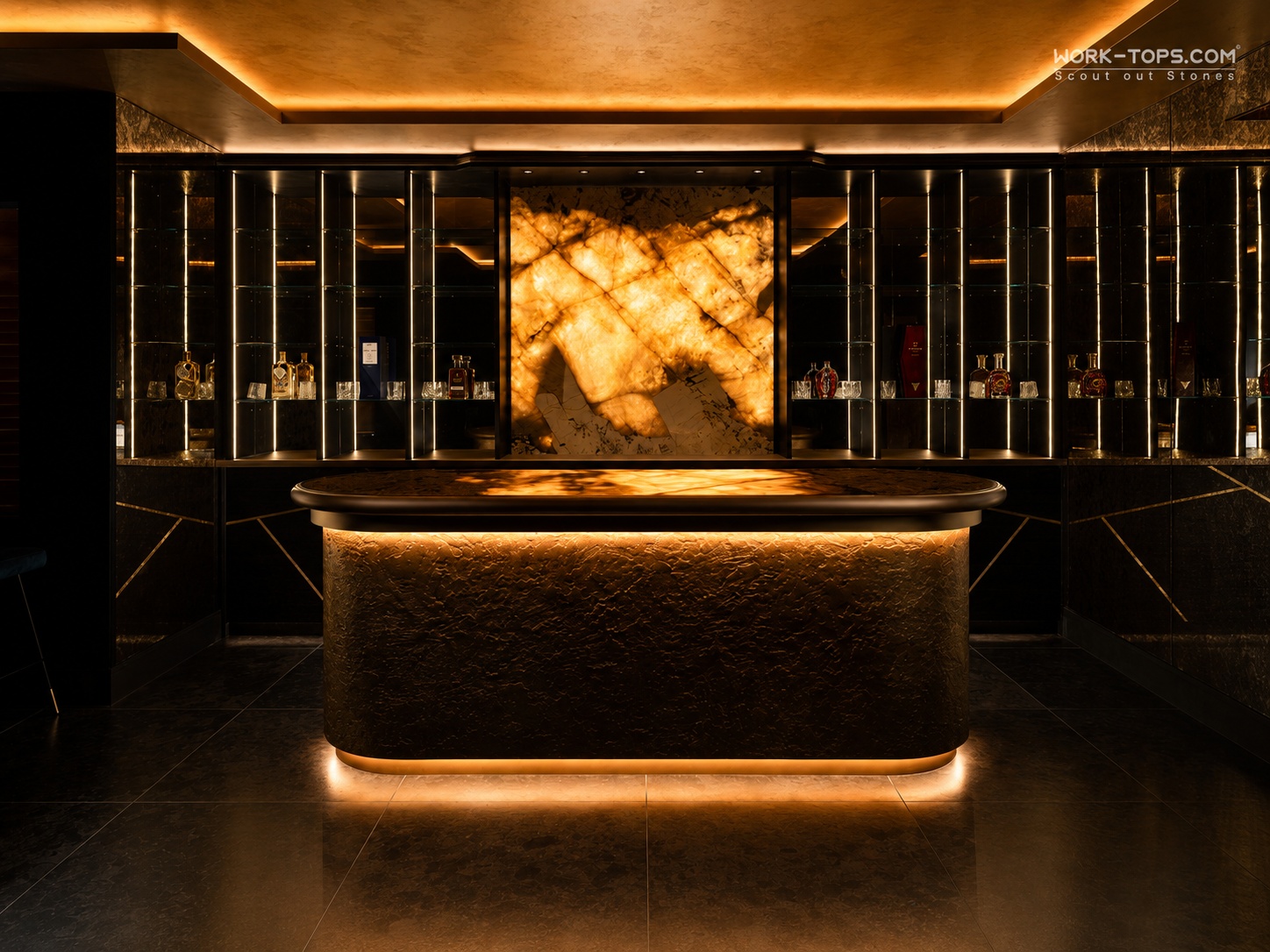
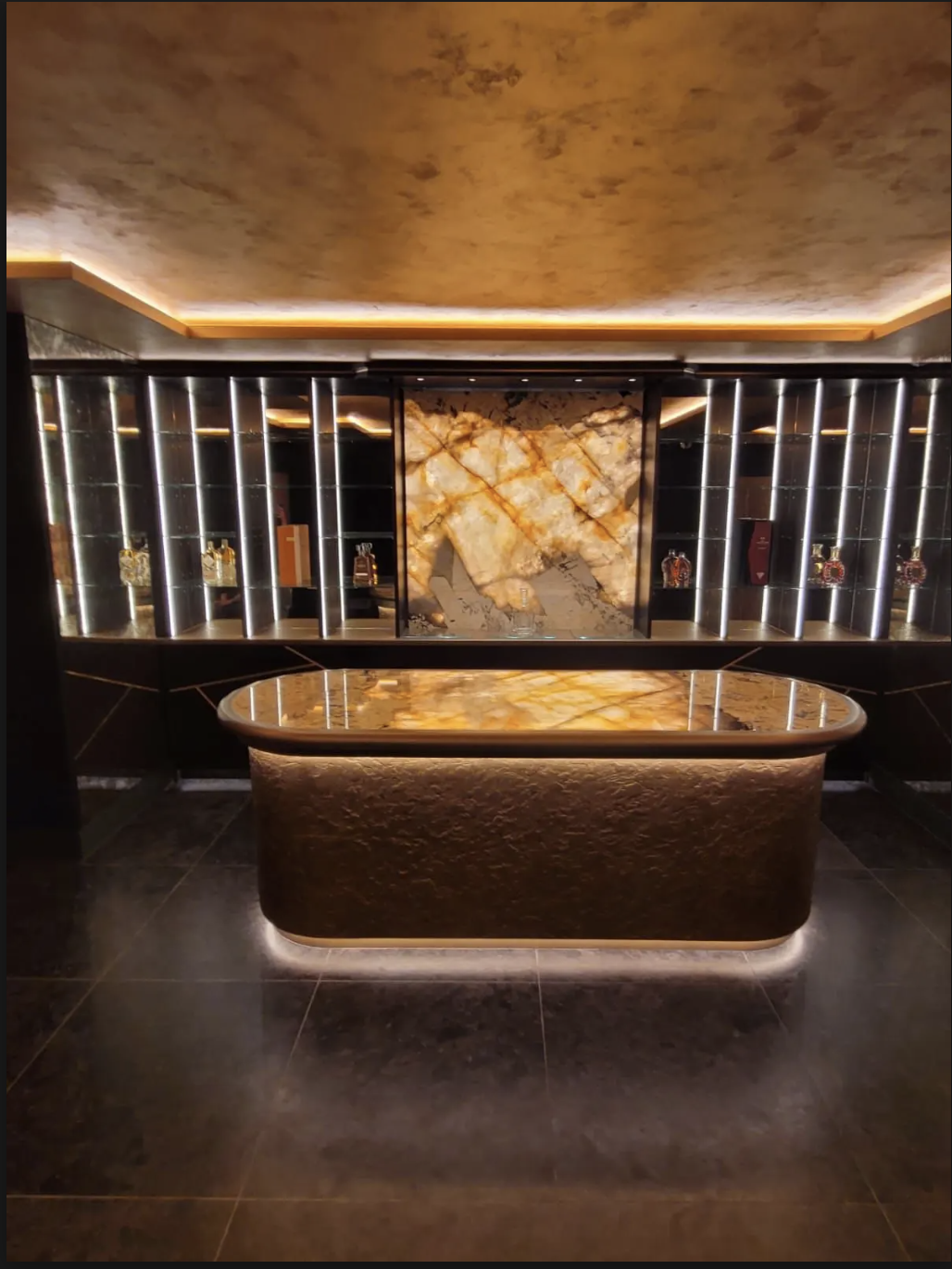
Patagonia Quartzite With Built-in Backlights Is Grabbing More Attention!
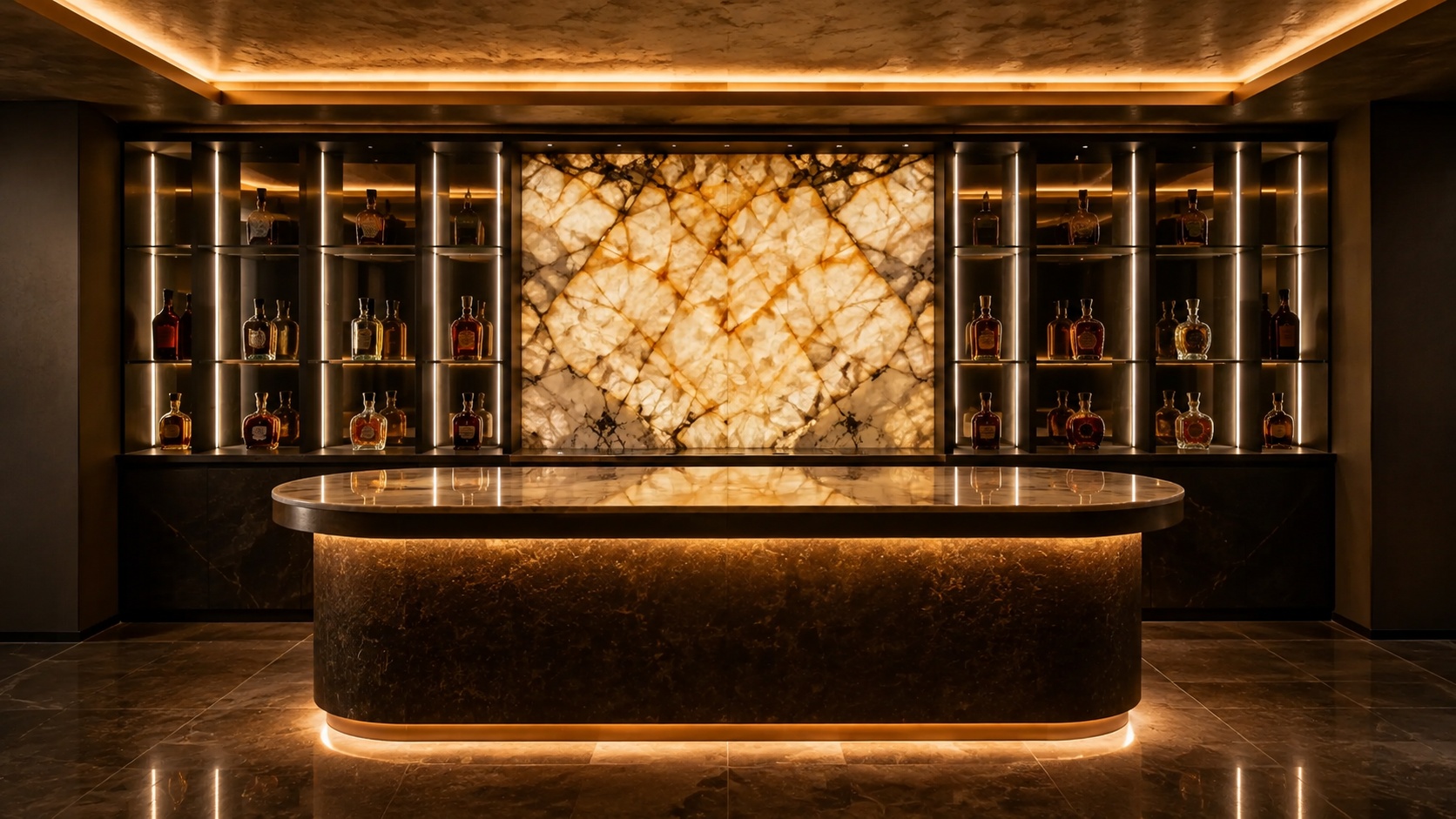
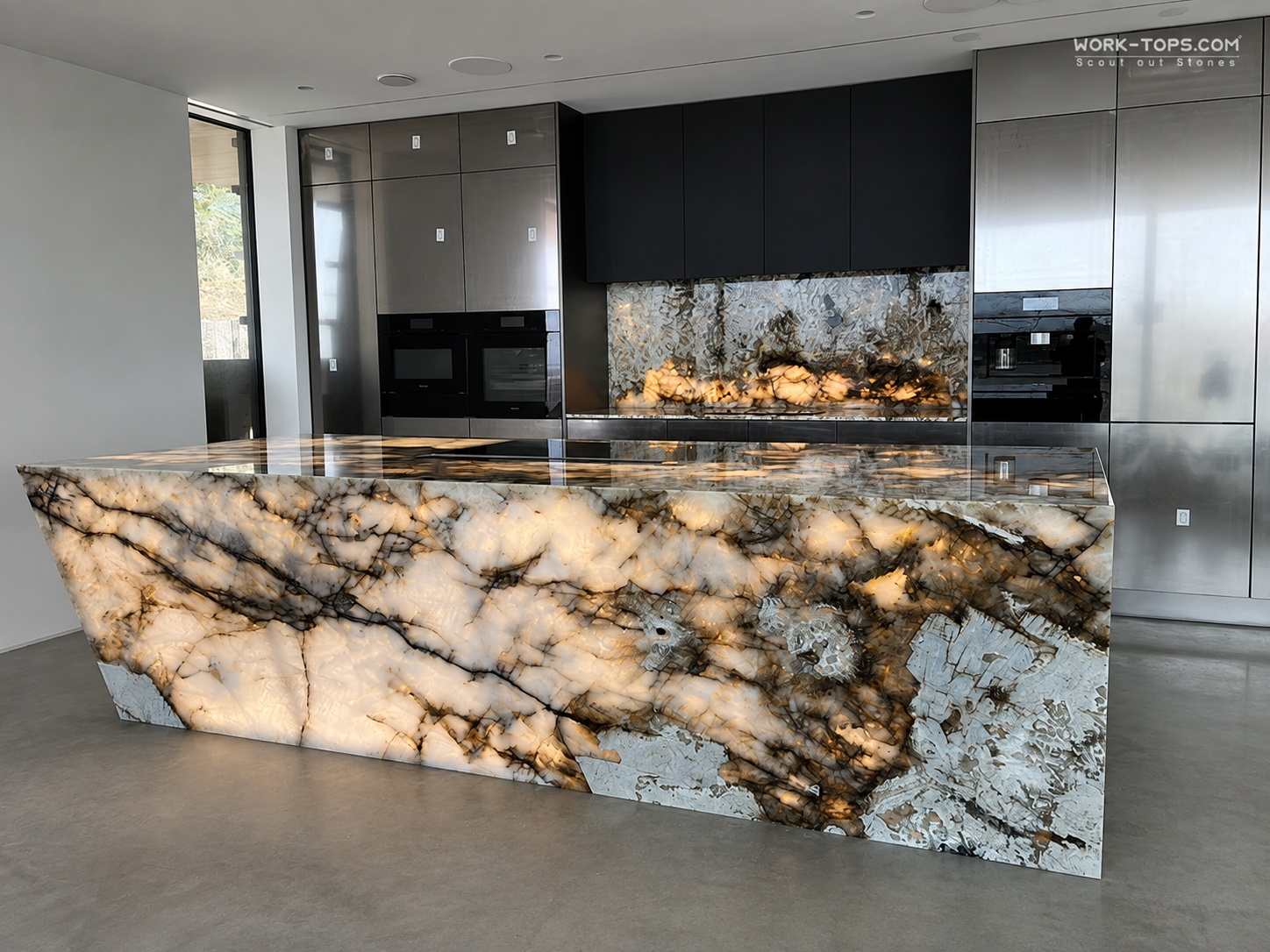 Patagonia Quartzite is quickly becoming one of the most talked-about natural stones in luxury interiors, especially with the growing demand for backlit stone applications. From our recent projects, we have noticed that 5 out of 12 featured designs incorporated Patagonia Quartzite with illuminated elements, highlighting a shift towards more creative and personalised interiors.
Clients are now exploring advanced concepts, including built-in backlit TV units, statement bar panels, and feature walls crafted from Patagonia Quartzite. The future of stone design continues to evolve, and who knows, by 2030, we may even see floating stone worktops becoming a reality. As innovation continues, we look forward to seeing how interior designers, architects, and craftsmen push the boundaries of what is possible with natural stone.
So, What Is the Downside of Quartzite?
Worth being straight about this, because too many blogs oversell the material. Quartzite’s real downsides are:
- It’s porous, and it needs sealing. Genuine quartzite is harder than marble, but it isn’t glass; it has microscopic pores that can pull in oil, wine, or coffee if left unsealed. A proper impregnating seal, reapplied every one to two years depending on the stone, keeps this in check.
- It costs more. Because of its density and the labour involved in quarrying and fabricating it, quartzite typically sits above granite and mid-range engineered quartz on price.
- Colour choice is narrower than engineered stone. You’re working with what nature gives you, not a factory palette, which is either the whole appeal or a limitation, depending on your brief.
- Weight and installation complexity. These are heavy slabs, and a proper template-and-fit job by an experienced team matters more than with lighter materials.

None of that makes quartzite a poor choice; it just means it rewards being specified properly rather than picked from a swatch.
Question One: What Are You Actually Building?
This is where I always start with a client, because it changes everything downstream.
- Kitchen worktops are the heavy-traffic zone; chopping boards, hot pans, and wine glasses are left out overnight. This is where quartzite earns its reputation and where a bookmatched island can genuinely become the room’s centrepiece.
- A bathroom vanity sees less abuse but more standing water and toiletries with acidic or alcohol-based ingredients. Here, a softer, more delicate exotic marble – Calacatta, Arabescato, or a green Verde Antico – can shine since it isn’t fighting daily knife work.
- A feature or waterfall accent wall is pure theatre. This is where I tell clients to spend their “wow” budget on the most dramatic veining they can find, because there’s no wear-and-tear argument to make you play it safe.
Question Two: What’s the Look You’re Chasing?
A few pairings I’d suggest, like I would to someone standing in the yard with me:
- Warm, organic neutrals (currently the strongest 2026 trend): a honey-and-caramel-veined Quartzite, like Taj Mahal, against oak or walnut cabinetry, brushed-brass hardware, and warm white walls.
- Coastal or Japandi calm: an Ocean Blue or Blue Roma quartzite, soft blues and taupe moving through the slab, paired with pale rattan, driftwood tones, and matte black fittings.
- Classic, high-drama luxury: an exotic Calacatta or Arabescato marble on a bathroom vanity or feature wall, deep grey-gold veining against black or bronze fixtures – this is the “old money” look that never seems to go out of fashion.
- Bold, contemporary statement: a Cristallo or Fantasy-style quartzite with orange or rust flecking through a cool white base, set against dark cabinetry for real contrast.
Whatever direction you lean, view your sample under three lights before committing: morning daylight, late afternoon, and your actual kitchen spots or bathroom LEDs. Stone reads completely differently under each, and it’s the single biggest source of buyer’s remorse I see.
Question Three: How Hard Will This Surface Actually Work?
Be honest with yourself here, because it’s the difference between a slab that ages beautifully and one that needs babying.
- Heavy daily use — Family kitchen, regular cooking, kids, entertaining:
 Go for quartzite and go for a well-sealed, denser stone. It handles heat, resists scratching better than almost any natural stone, and tolerates the odd moment of carelessness.
 - Moderate use — Bathroom vanity, drinks bar, occasional cooking: Exotic marble becomes a genuinely good option here. Less daily assault means the etching risk drops, and you get access to veining patterns quartzite simply can’t match.
- Low use — Feature wall, splashback, statement piece: This is marble’s home turf. Let the stone be beautiful without asking it to be bulletproof.
 Go for quartzite and go for a well-sealed, denser stone. It handles heat, resists scratching better than almost any natural stone, and tolerates the odd moment of carelessness.
Where This Is All Heading
The stone world in 2026 is leaning hard into individuality, bold veining as a design centrepiece rather than a background texture, warmer palettes replacing the cool-grey decade we’ve just come through, and buyers who are more informed and asking sharper questions about porosity, hardness, and long-term performance than they were even two or three years ago. That’s a good thing. A well-informed client and a properly fabricated slab are how you end up with a surface that still looks right in fifteen years.
Ready to bring them home?
Photos and swatches only tell you so much; browse our full range of Quartzite Worktops at www.work-tops.com, or get in touch, and we’ll talk through what’s right for your project, your budget, and how hard your kitchen actually works day to day.

