


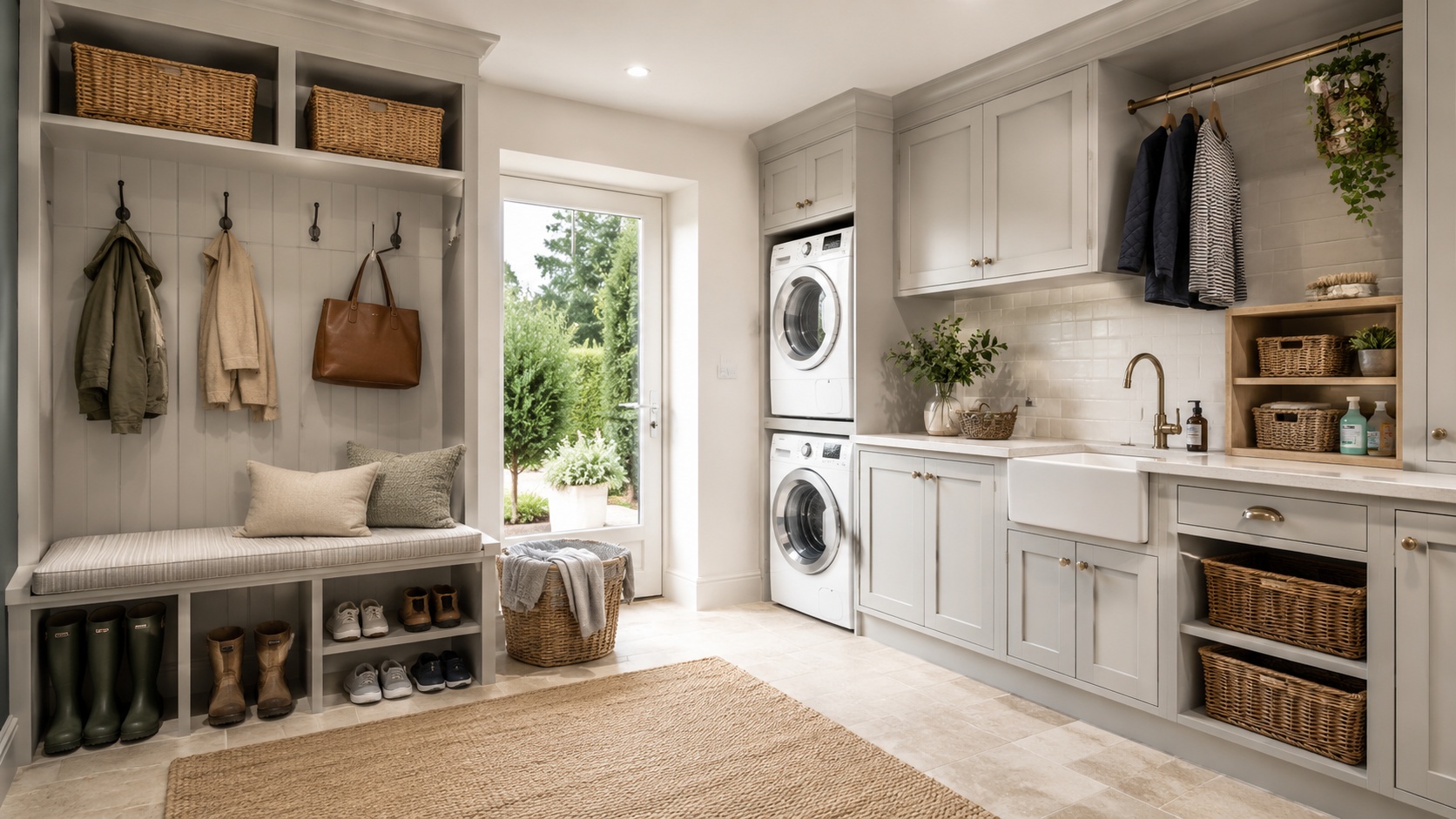
Quick Answer: Boot room utility ideas help you combine everyday storage, laundry, outdoor gear and household organisation in one practical area. A good boot room utility space usually includes a bench, coat hooks, shoe storage, laundry appliances, tall cupboards, easy-clean flooring and ventilation, making it especially useful for busy UK homes, families, pet owners and anyone dealing with muddy shoes, wet coats or limited storage.
A boot room utility space is one of those home improvements that sounds simple, but can change the way a house works every day. It gives muddy shoes somewhere to go, keeps coats away from the hallway, hides laundry baskets from the kitchen and creates a clear place for cleaning products, bags, sports kits and pet items.
For many UK homes, the appeal is practical rather than decorative. Hallways can become crowded quickly, especially during wet months when shoes, umbrellas and coats need somewhere to dry. A combined boot room and utility room solves that problem by giving the mess a proper home.
The best designs do not need to be large or expensive. A narrow passage, rear entrance, side extension, or corner of a kitchen or converted cupboard can all work well if the layout is planned properly. The aim is to create a space that is easy to use, easy to clean and organised enough to support everyday life.
What Is a Boot Room Utility Space?
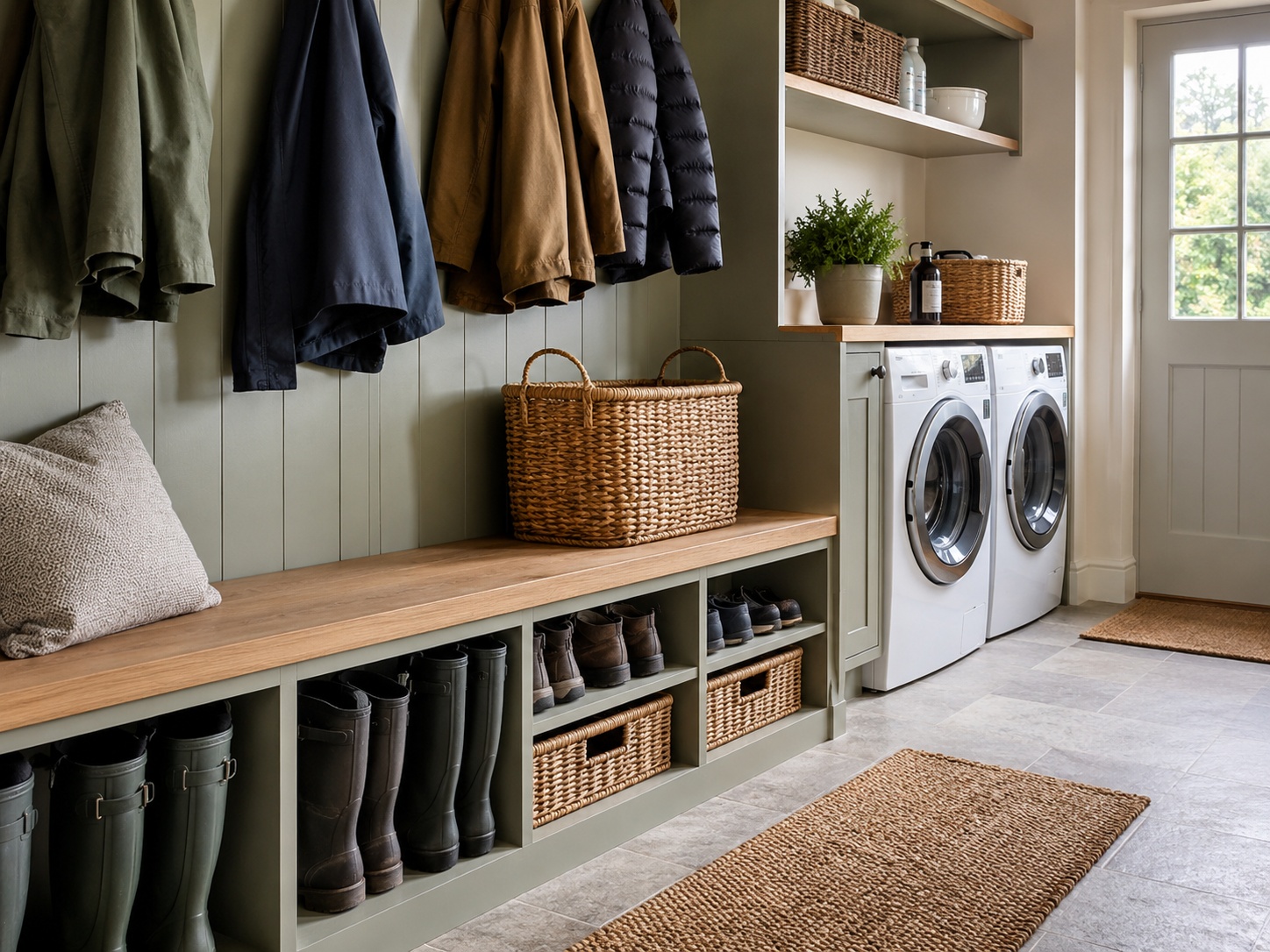
A boot room utility space combines the job of a traditional boot room with the function of a utility room. In simple terms, it is a practical area where outdoor clothing, shoes, laundry, cleaning equipment and household items can be stored together.
A classic boot room is usually placed near a back door, side entrance or garden access point. It is designed for boots, coats, bags and outdoor gear. A utility room, on the other hand, usually handles laundry appliances, cleaning storage and sometimes extra fridge or freezer space. When the two are combined, the result is a hardworking room that keeps daily clutter away from the main living areas.
This type of space works well in family homes, countryside properties, modern extensions and smaller houses where every square metre needs to do more. It can also be useful in flats or townhouses where a full utility room is not possible, but a compact storage wall or laundry cupboard can still improve the way the home functions.
Why Boot Room Utility Ideas Work Well in UK Homes
UK homes often have to deal with changing weather, wet shoes, school bags, pet walks, sports kits and weekly laundry all at the same time. Without a dedicated storage area, these items usually end up in the hallway, kitchen or living room.
A boot room utility area creates a buffer between outside and inside. Shoes can come off before they reach the carpet. Coats can hang near the door. Laundry can be sorted away from the kitchen. Cleaning products can be stored safely in one place. For homes with children or pets, this can make the whole house feel calmer and easier to manage.
There is also a design benefit. Built-in storage, matching cabinetry and thoughtful finishes can make a practical space feel considered rather than like an afterthought. When planned well, a boot room utility can support both the look and the daily use of the home.
Best Boot Room Utility Ideas for Everyday Use
1. Add a Built-In Bench for Shoes and Bags
A bench is one of the most useful features in a boot room utility space. It gives people somewhere to sit while taking shoes on and off, and it can also hide storage underneath.
For a neat finish, consider a built-in bench with drawers, baskets or open cubbies below. This works well for trainers, school shoes, dog leads, umbrellas and everyday bags. In smaller homes, a slim bench with wall hooks above can provide the same function without taking up too much floor space.
2. Use Tall Cupboards for Coats and Cleaning Items
Tall cupboards make the most of vertical space and help keep clutter behind closed doors. They are useful for coats, ironing boards, vacuum cleaners, mops, brooms and cleaning products.
If the room is narrow, keep the cupboard fronts simple and avoid heavy handles that stick out into the walkway. Full-height doors in the same colour as the wall can make the room feel more streamlined.
3. Plan Proper Shoe Storage
Shoe storage is usually the main reason people look for boot room utility ideas. Open cubbies are easy for daily shoes, while drawers and pull-out racks create a cleaner look. Families may prefer one section per person, so everyone has a clear place for their own shoes.
If the space is near a garden entrance, choose materials that can handle moisture and dirt. Wipeable shelves, tiled flooring and removable baskets make cleaning much easier.
4. Include Laundry Appliances Without Making the Space Feel Busy
A washing machine and tumble dryer can work well in a boot room utility area, but they need to be planned carefully. If space allows, place appliances behind cupboard doors or under a worktop. This keeps the room looking calm while still making laundry easy to access.
A worktop above the appliances is useful for folding clothes, sorting laundry or placing baskets. Wall cupboards above can hold detergents and fabric care items safely out of the way.
5. Use Hooks, Rails and Pegs for Quick Access
Not every item needs to be hidden behind a door. Hooks and peg rails are ideal for coats, hats, reusable shopping bags, dog leads and school bags. They make the space easy to use because items can be grabbed quickly when leaving the house.
To stop the area looking messy, keep hooks organised in zones. For example, one section can be for coats, another for bags and another for pet items. A shelf above the hooks can hold baskets for gloves, scarves and seasonal accessories.
6. Choose Easy-Clean Flooring
Flooring matters in a boot room utility more than in many other parts of the home. This space may see muddy boots, wet coats, laundry baskets, pet bowls and cleaning equipment, so the floor needs to be durable and easy to wipe.
Porcelain tiles, stone-effect tiles, luxury vinyl tiles and sealed stone are all common choices. A patterned tile can add character, while a neutral floor can help a small room feel bigger. Avoid delicate flooring that stains easily or becomes slippery when wet.
7. Create a Pet-Friendly Corner
For pet owners, a boot room utility can be the perfect place for leads, food, towels, grooming items and muddy paws. A low drawer for pet towels, hooks for leads and a washable mat near the entrance can make daily walks easier to manage.
Some larger homes include a small pet washing area, but this only works if plumbing, drainage, ventilation and waterproof finishes are considered properly. In many homes, a simple towel station and easy-clean floor will be more realistic.
Small Boot Room Utility Ideas
A boot room utility does not need to be a full separate room. In smaller UK homes, the same idea can work as a compact storage wall, a rear hallway fit-out, a cupboard conversion or a section of kitchen cabinetry.
For a small space, start with the essentials: hooks for coats, a place for shoes, one laundry basket and a cupboard for cleaning products. Keep the colour palette light, use doors where possible and avoid filling every wall with open shelving. Too many visible items can make a small boot room feel crowded.
Sliding doors, pocket doors or bi-fold cupboard doors can also help where space is tight. If the area is part of an open-plan kitchen, matching the cabinetry to the kitchen units can make the whole space feel more intentional.
For more design inspiration, the guide to modern kitchen ideas can also help when planning a kitchen-adjacent utility space.
How to Design a Boot Room Utility Area
The best way to design a boot room utility area is to begin with daily habits rather than with decoration. Think about how the household enters the home, where shoes are removed, where laundry piles up and which items are always left in the wrong place.
Once the practical problems are clear, the layout becomes easier. Shoes need low storage. Coats need hooks or hanging space. Laundry needs baskets and appliance access. Cleaning items need secure cupboards. Pet items need a washable area. Outdoor gear needs space near the door.
Lighting and ventilation should not be ignored. A window, extractor fan or suitable ventilation can help manage moisture, particularly if the space includes laundry appliances, wet coats or drying clothes. Where plumbing, extraction or electrical work is involved, it is sensible to check current guidance and use qualified trades where required.
Mistakes to Avoid When Planning a Boot Room Utility
Trying to Fit Too Much Into One Space
The biggest mistake is expecting one small area to hold everything. A boot room utility should make life easier, not become a storage cupboard that is hard to use. Prioritise the items that genuinely need to live there every day.
Choosing the Wrong Flooring
A beautiful floor that cannot handle mud, water or cleaning products will quickly become a problem. Practical finishes are usually better than delicate materials in this part of the home.
Forgetting Ventilation
Boot rooms and utility rooms can collect moisture from laundry, wet coats and outdoor shoes. Poor ventilation can make the space feel damp or stale. This is especially important when appliances or drying areas are included.
Not Giving Each Item a Clear Home
Storage only works when it is easy to understand. If shoes, coats, bags and laundry do not have clear zones, clutter will return quickly. Labels, baskets and separate cubbies can help keep the system simple.
Do Boot Room Utility Ideas Add Value to a Home?
A well-designed boot room utility can make a home more appealing because it improves storage, organisation and day-to-day practicality. Buyers often notice homes that feel easy to live in, especially when storage is built in and the main rooms are free from clutter.
That said, value depends on the quality of the design and the type of property. A neat, durable and well-planned boot room utility is more likely to add appeal than a cramped space with poor finishes. The strongest designs feel like a natural part of the home rather than an awkward add-on.
For homeowners, the biggest benefit may be everyday convenience. When coats, shoes, laundry and cleaning items are organised properly, the rest of the home feels easier to maintain.
FAQs
What is a boot room utility?
A boot room utility is a combined space used for outdoor clothing, shoes, laundry, cleaning products and household storage. It usually sits near an entrance, kitchen, rear hallway or side access point.
Are boot room utility ideas good for small homes?
Yes. Small homes can benefit from compact boot room utility ideas such as wall hooks, shoe cubbies, narrow benches, laundry cupboards and tall storage units. The key is to keep the layout simple and avoid overcrowding the space.
What should every boot room utility include?
Useful features include shoe storage, coat hooks, a bench, laundry baskets, cleaning cupboards, easy-clean flooring and good ventilation. Larger spaces may also include appliances, a sink or pet-friendly storage.
Can a boot room utility be added to an existing home?
In many cases, yes. A rear hallway, side return, kitchen corner, understairs area or large cupboard can often be adapted. More complex changes involving plumbing, electrics or ventilation should be planned with suitable professionals.
What flooring is best for a boot room utility?
Durable and easy-to-clean flooring is best. Porcelain tiles, sealed stone, stone-effect tiles and luxury vinyl tiles are common options because they can handle mud, moisture and regular cleaning better than delicate flooring.
Final Thoughts
Boot room utility ideas are popular because they solve real household problems. They give wet coats, shoes, laundry, cleaning products and outdoor gear a proper place, while helping the rest of the home stay calmer and more organised.
The best design is not always the biggest. It is the one that matches how the household actually lives. With good storage, durable finishes and a clear layout, even a small boot room utility space can make a noticeable difference to everyday life.
For more practical home and interiors features, visit PAD Magazine.