


Several factors place British Columbia at the forefront of sustainable custom home building, with many custom home builders in British Columbia leading innovative, eco-focused construction practices::
1. Challenging topography encourages innovation
Coastal islands, steep forested lots, and remote mainland parcels require builders to rethink traditional construction workflow. Access by barge, water taxi, or mountain road has pushed Canadian designers and builders to develop sophisticated logistics planning and more environmentally durable building envelopes.
2. Climate variability drives performance-focused design
BC’s weather extremes, from coastal rainstorms to mountain cold snaps, demand higher energy efficiency. As a result, airtight construction, advanced insulation systems, and renewable power generation are increasingly standard practice rather than optional upgrades.
3. Homeowners expect sustainability as a baseline
A growing number of clients in BC prioritise Net Zero performance, resilience during outages, minimal waste during construction, and a strong architectural connection to the landscape. These expectations create an ideal environment for experimenting with new building technologies and design frameworks.
Much like the UK’s push toward the Future Homes Standard, BC’s demand for energy-efficient custom homes represents a cultural shift: sustainability is no longer niche, it’s mainstream.
A Real-World Example: The Gambier Island Net Zero Cabin
Content image 1
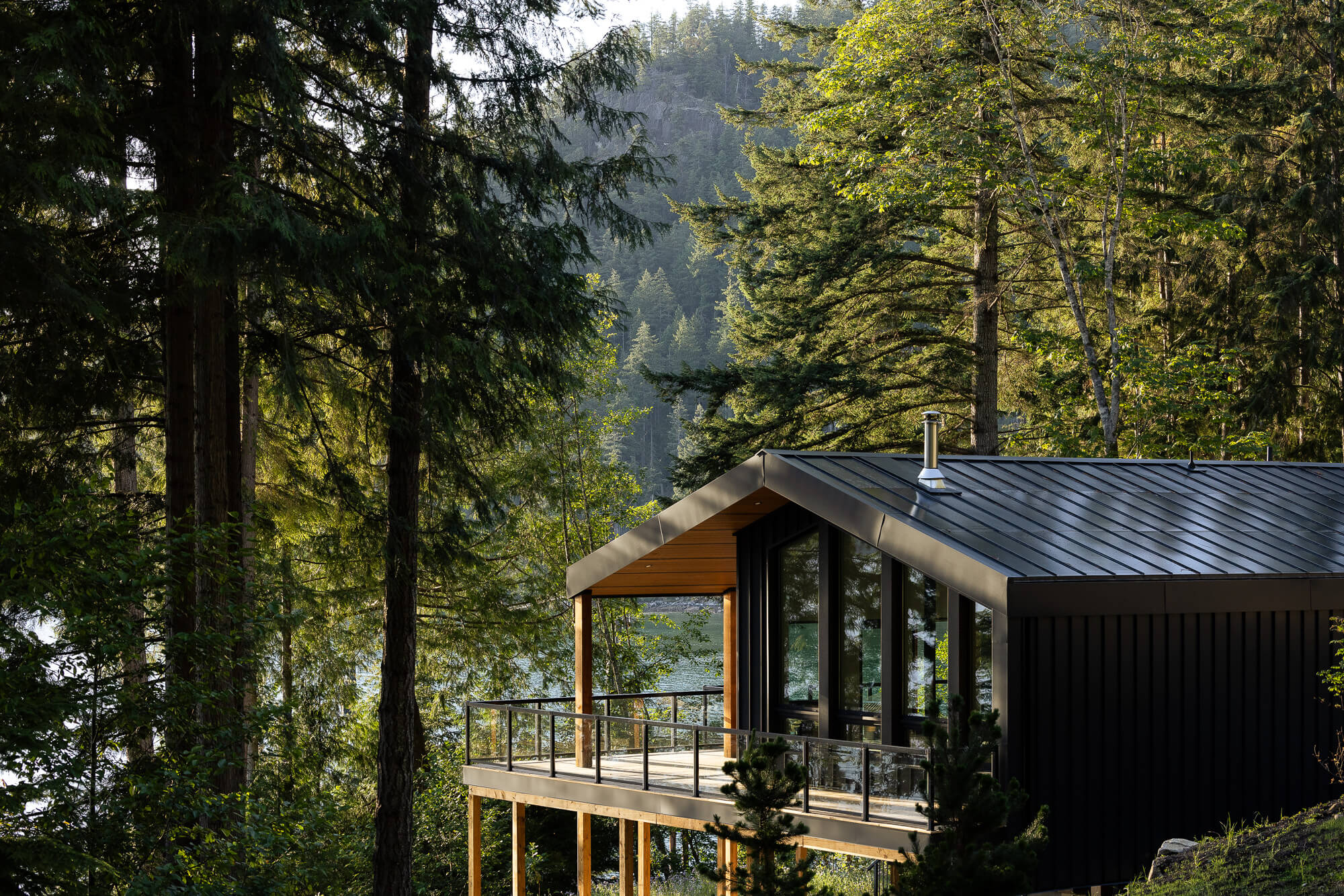
One of the most compelling recent projects illustrating these trends is a high-performance Net Zero cabin on Gambier Island, located in the Howe Sound region off Vancouver’s coast. Accessible only by boat, Gambier Island exemplifies the type of remote setting where innovation is not optional, but essential.
Architectural Intent Meets Environmental Responsibility
The homeowners sought a contemporary cabin that blended harmoniously with its forested surroundings while achieving Net Zero performance. The design integrates subtle roof-mounted solar panels that produce more annual energy than the home consumes—a sophisticated achievement considering the island’s frequent power outages.
The exterior form balances durability with light environmental impact, using strategic siting to preserve trees and minimise land disturbance. Inside, the material palette reflects the natural setting: warm woods, clean lines, and generous glazing that frames views of the surrounding coastline.
The Logistics: An Engineering Challenge on Its Own
Every component, from framing materials to interior finishes, had to be transported by barge. Crews travelled by company boat daily, timing construction activities around tides, weather windows, and marine availability.
This complexity resulted in:
- streamlined coordination among trades
- reduced waste and optimised delivery loads
- meticulously staged building sequences
- engineered detailing to suit island exposure
For UK professionals accustomed to rural builds in the Highlands, Hebrides, or other hard-to-access sites, this project offers strong parallels in methodology, site planning, and resilience-based design.
Net Zero Construction as a Design Driver
Far from being an afterthought, energy performance shaped nearly every design and construction decision:
- high-efficiency building envelope for airtightness
- precision-engineered window placement for passive solar gain
- reduced-energy mechanical systems suitable for remote locations
- carefully coordinated insulation and material selection
- renewable energy generation integrated into the architecture
Rather than compromising aesthetics, these strategies elevated them—showing that performance-driven design can coexist beautifully with contemporary West Coast architecture.
For UK readers exploring Passivhaus certifications or Net Zero retrofit strategies, BC’s approach provides a glimpse into how performance and craft can reinforce one another.
Design as Experience: Interior Craftsmanship and Natural Connection
Beyond technical performance, the Gambier Island cabin demonstrates the emotional and experiential value of thoughtful detailing.
The interior layout embraces natural light, views, and functional simplicity. Custom millwork creates cohesion throughout the home, while warm materials soften the contemporary structure.
The design team adopted a holistic approach:
To embrace nature without overwhelming it, to create comfort without excess, and to celebrate the landscape through architectural restraint. These priorities resonate strongly with the UK’s modern rural design movement, where contextual sensitivity is increasingly celebrated.
Remote Projects Require Highly Specialised Teams
Remote-location construction is not just traditional building with extra steps. It is its own discipline—requiring:
- advanced logistics management
- marine and terrain-based transport planning
- careful sequencing of trades
- adaptable energy solutions
- resilient architectural detailing
Choosing a builder without this expertise can result in delays, unexpected budget expansion, or compromised performance outcomes.
This is where British Columbia’s leading teams distinguish themselves.
A Global Model for High-Performance Custom Homes
While the UK and Canada differ in geography, regulatory frameworks, and climate, both regions share an increasing commitment to low-impact, high-performance residential design. As more homeowners seek sustainable, long-lasting homes, projects like the Gambier Island Net Zero Cabin demonstrate what is possible when careful planning, advanced building science, and site-sensitive design come together.
BC’s builders, often working in conditions far more complex than typical mainland sites, have refined methodologies that offer valuable lessons for designers worldwide:
Energy efficiency can enhance beauty, logistical challenges can inspire creativity, and sustainable construction can result in timeless living spaces.
Conclusion
For UK readers, architects, and developers exploring the future of sustainable home building, British Columbia serves as a compelling international reference point.
The Gambier Island project highlights how technical expertise, thoughtful design, and innovative construction management can redefine what’s achievable in challenging environments.
Firms like Blue Water Concepts Ltd continue to push this innovation forward in British Columbia, offering a perspective that blends architectural excellence with environmental responsibility, an approach increasingly relevant across global markets.