


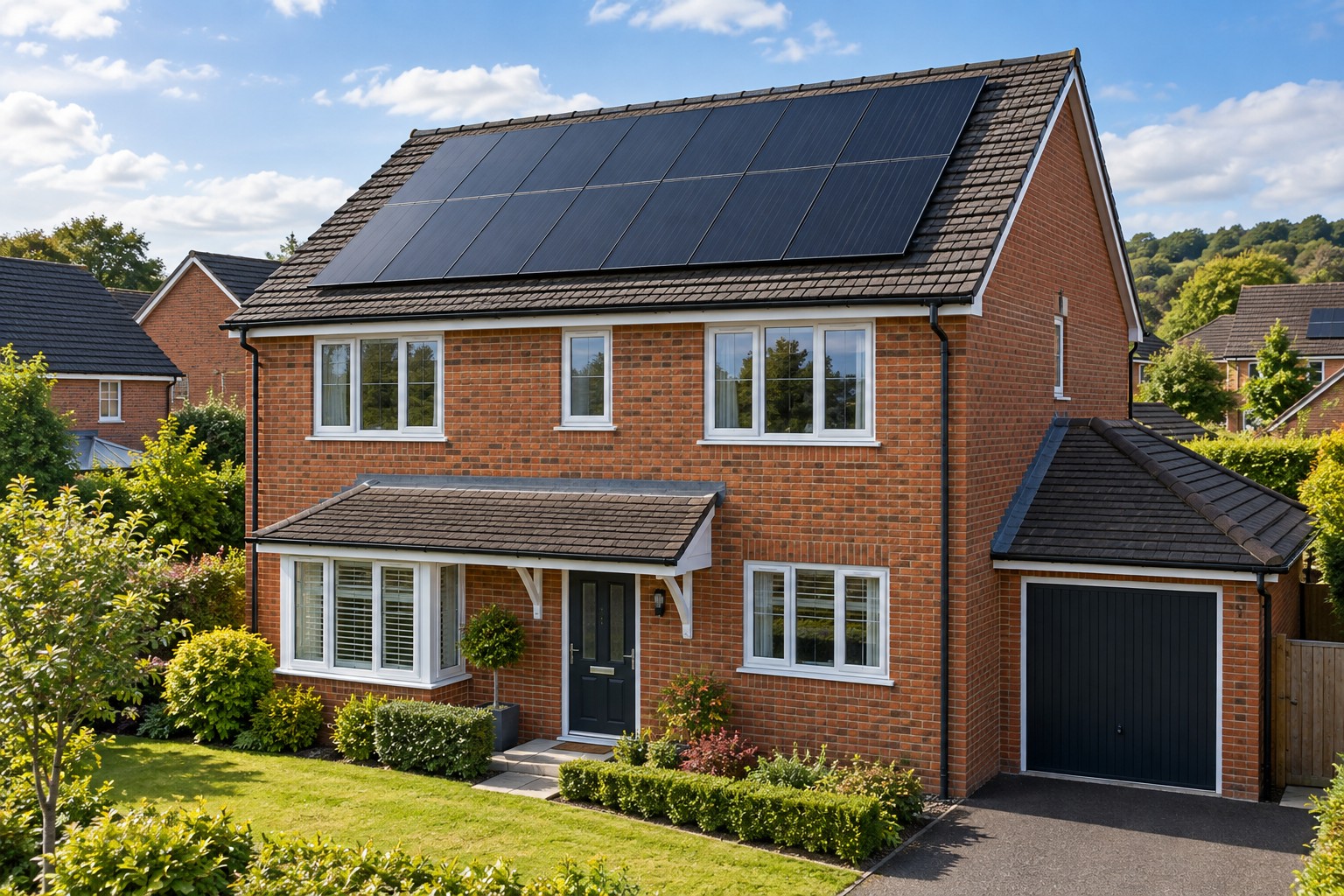
In 2026, a typical home solar panel installation in the UK costs between £5,000 and £11,000 and usually pays for itself in about seven to twelve years. With 0% VAT still in place and export payments available through the Smart Export Guarantee, solar remains one of the most practical upgrades a homeowner can make. This guide covers what you will pay, how much you will save, which grants you can claim, and how to choose an installer you can trust, such as Prime Time Solar.
What Home Solar Panel Installation Involves
Solar photovoltaic (PV) panels convert daylight, not just direct sunshine, into electricity. That matters in the UK, where panels still generate useful power on overcast days, just at a reduced rate.
Your panels’ electricity powers your home first. Any surplus is either stored in a battery for later or exported back to the grid, where you get paid for it.
A standard home setup has four main parts:
- Solar panels: mounted on your roof to capture daylight and generate electricity.
- Inverter: converts the direct current from the panels into the alternating current your home uses.
- Battery storage (optional): stores surplus energy so you can use it in the evening instead of exporting it at a low rate.
- Monitoring app: lets you see generation, usage and savings in real time.
How Much Does Solar Panel Installation Cost in the UK?
Prices have fallen sharply as the technology has matured. For 2026, a fully installed residential system typically costs £5,000 to £11,000, depending on roof size and household demand.
A 4kW system, the sweet spot for a typical three-bedroom home, usually lands between £6,000 and £8,000. Adding a battery pushes the total up by roughly £4,000 to £8,000.
| System Size | Typical Home | Panels | Estimated Installed Cost |
|---|---|---|---|
| 2kW | Small home/flat | 4 to 6 | £4,000 to £6,000 |
| 3 to 3.5kW | Small to medium home | 8 to 10 | £5,000 to £7,000 |
| 4kW | Average UK home | 10 to 12 | £6,000 to £8,000 |
| 5kW | Larger family home | 13 to 16 | £7,000 to £9,500 |
| 6kW | High usage home | 15 to 18 | £9,000 to £13,500 |
One saving applies to everyone: there is currently 0% VAT on residential solar and battery installations, a relief due to run until spring 2027 before reverting to the reduced rate. That alone saves the average household £1,000 or more.
How Much Will You Save and Earn?
For most homeowners, solar pays for itself in seven to twelve years, after which the electricity is effectively free. A well-sized system saves a typical household several hundred pounds a year, and considerably more when paired with a battery and daytime usage.
On top of bill savings, the Smart Export Guarantee (SEG) pays you for surplus electricity you send to the grid. Rates vary widely, so it pays to shop around once your system is live.
| Tariff Type | Typical 2026 Rate | Best For |
|---|---|---|
| Flat rate, open market | 4p to 16p per kWh | Any supplier, no battery needed |
| Time of use | Up to around 30p at peak | Battery owners who can shift exports |
| Supplier or installer locked | Up to 25p per kWh | Systems bought through that supplier |
The SEG is a regulated scheme, and you need an MCS-certified installation to claim it.
Solar Panel Grants and Funding in 2026
Genuinely free solar is rare and reserved for those who qualify on income grounds, but several routes are worth checking:
- Warm Homes: Local Grant: the main route to funded or free solar for lower-income households in England, offering substantial support for eligible homes, broadly those under a set income threshold with a lower EPC rating.
- ECO4: an established scheme funding measures for vulnerable and low-income households, now winding down and being succeeded by the wider Warm Homes Plan.
- 0% VAT: applies automatically to every homeowner, with no application needed, until spring 2027.
Eligibility rules vary across England, Scotland and Wales, so confirm what is currently available before you buy.
Do You Need Planning Permission?
For most homes, solar panels fall under permitted development, meaning no planning permission is required.
The main exceptions are listed buildings and properties in conservation areas or national parks, so check with your local authority first. Your installer will usually handle the grid notification, known as the DNO paperwork, on your behalf.
How to Choose the Right Installer
This is where homeowners either save themselves a headache or walk into one. The single most important thing to look for is MCS accreditation, the industry standard you will need to claim the Smart Export Guarantee. Membership of a consumer code such as RECC is another strong sign of a reputable firm.
Beyond the badges, get two or three quotes, check genuine reviews on independent platforms, and make sure warranties are clearly spelt out. Good installers now offer product warranties of up to 30 years.
A local, well-reviewed company often gives more attentive service than a national outfit. Homeowners across the East of England looking for a new solar panel installation in Essex, for example, benefit from a regional team that knows local roof types, planning quirks and grid connections first-hand.
Ask each installer how they sized your system, what they expect it to generate, and whether battery storage genuinely stacks up for your usage. A trustworthy firm will not oversell you a bigger system than you need.
The Installation Process, Step by Step
- Free survey and quote: a surveyor assesses your roof orientation, pitch, shading and structure, then recommends a system size.
- Design and agreement: you receive a tailored proposal with expected generation and costs.
- Installation: scaffolding goes up, panels and the inverter are fitted, and everything is wired in, typically within a day or two.
- Commissioning and handover: the system is tested, your monitoring app is set up, and you receive your MCS certificate and paperwork.
- Sign up for an export tariff: the final step to start earning from your surplus.
Is Solar Worth It in 2026?
For most UK homeowners with a suitable roof, the answer is a clear yes. With hardware prices down, 0% VAT in place, export payments available and energy costs unlikely to fall sharply, solar is one of the most practical home improvements you can make.
The key is doing your homework, choosing a properly accredited installer, and sizing the system to how your household actually uses energy. A good starting point is a free survey and quote, which tells you exactly what your roof can generate and what you would pay before you commit to anything.
Before committing, it is worth understanding which setup suits your household. PAD Magazine’s guide to what size solar panel system your home really needs explores the factors to consider when choosing a system.
Frequently Asked Questions
How Much Does Home Solar Panel Installation Cost in the UK?
A typical UK system costs between £5,000 and £11,000 fully installed in 2026. A 4kW setup for an average three-bedroom home usually lands between £6,000 and £8,000. Adding battery storage raises the total by roughly £4,000 to £8,000, and 0% VAT currently applies to every installation.
How Long Do Solar Panels Take to Pay for Themselves?
Most home solar systems pay for themselves within seven to twelve years, depending on system size, energy use and export rates. After that, the electricity you generate is effectively free. Pairing panels with a battery and using more power during daylight hours shortens the payback period further.
Can I Get a Grant for Solar Panels in the UK?
Some households can. The Warm Homes: Local Grant supports eligible lower-income homes in England, and ECO4 has funded low-income households, though it is winding down. Every homeowner also benefits automatically from 0% VAT until spring 2027. Eligibility varies across England, Scotland and Wales.
Do Solar Panels Work on Cloudy Days in the UK?
Yes. Solar panels generate electricity from daylight, not only direct sunshine, so they still produce power on overcast days, just at a lower rate than in bright conditions. Over a full UK year, a well-positioned system generates enough to deliver meaningful bill savings, even on grey days.
Do I Need Planning Permission for Solar Panels?
For most homes, no. Solar panels usually fall under permitted development, so you don’t need planning permission. Exceptions include listed buildings and homes in conservation areas or national parks, so check with your local authority first. Your installer normally handles the grid notification paperwork for you.

