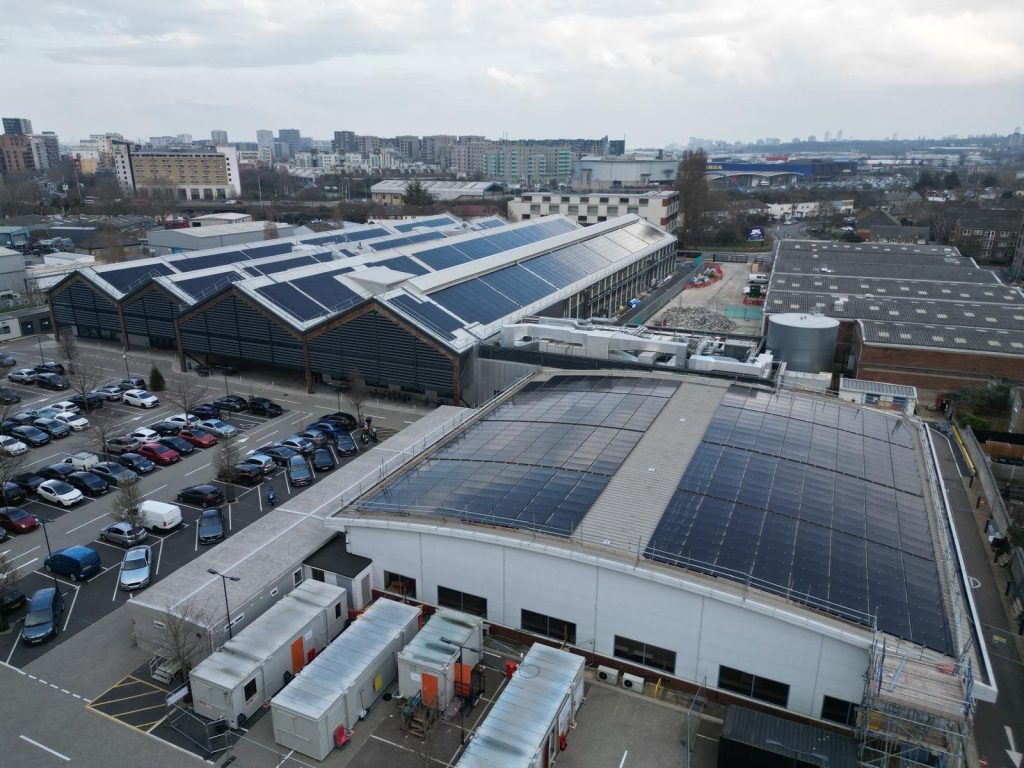
Renewable power developer Electron Green is working with Siemens Financial Services to bring more commercial rooftop solar projects to market, according to a release issued on 5 November 2026. The arrangement is intended to help businesses, landlords and asset owners overcome the practical and financial barriers that have held back solar on commercial buildings.
The release notes that less than 5% of commercial and industrial rooftops in the UK are thought to be equipped with solar installations, even though much of this flat roof space is suited to solar capture. By contrast, the UK surpassed 2 million total solar installations for the first time in March 2026, across homes, communities and solar farms, with the majority of new installations being rooftop solar.
01Barriers for businesses and landlords
According to the release, many organisations hesitate because solar often requires upfront capital, specialist knowledge, landlord and tenant alignment, planning permission, and engagement from senior decision-makers with competing priorities. Misconceptions also persist, including the belief that solar is ineffective in the UK, although solar PV systems rely on daylight rather than sunlight. Readers weighing up panels on more sensitive homes may find our piece on why solar on a listed building is not a lost cause useful.
Regulatory pressure is also rising. Under new building regulations coming into force in March 2027, Wales will be the first UK country to mandate a system for renewable electricity generation on new buildings, and similar rules are expected to follow in England. Landlords of privately rented commercial buildings over 1,000 square metres have a new deadline, set as of June 2026, to reach an EPC rating of B as a minimum from 2031.
02Two routes to rooftop solar with Electron Green
Electron Green, which launched in 2021, has 100MW of solar potential in development in the UK and Europe, and estimates that 55 million square feet of rooftop space in Europe could be available for installations. It works with real estate asset owners and high energy users such as supermarkets, retailers, data centres and schools, developing and managing rooftop solar PV projects from design and finance through to procurement, installation and operation.
The company offers two pathways. Clients can fund and own their PV system outright, or Electron Green can develop and fund the system and sign a Power Purchase Agreement (PPA) with the client. Under the PPA, the customer can access solar-powered electricity at an agreed fixed price for a 25-year term, with no capital outlay upfront. At the end of the term, or earlier if agreed, the system can transition to the end client.
03The role of specialist finance
Siemens Financial Services supports the PPA structure by financing projects and releasing capital back into the business, so that Electron Green can continue progressing further projects rather than having capital locked into completed or near-completed installations.
Gordon Kuper, Founder & Chief Financial Officer at Electron Green, said: “We’re a blue-chip developer working with blue-chip clients, so we need to know that we meet the highest standards in every aspect of the work that we do. We looked for a financing partner with similar credentials: highly knowledgeable and reliable.”
The release adds that for landlords and asset owners, rooftop solar can help turn underused space into a productive energy asset, supporting tenant needs while contributing to sustainability targets and future regulatory compliance. It also points out that between 2021 and 2023, the average electricity price for UK non-domestic users rose by over 90%.
Details and image via Electron Green.