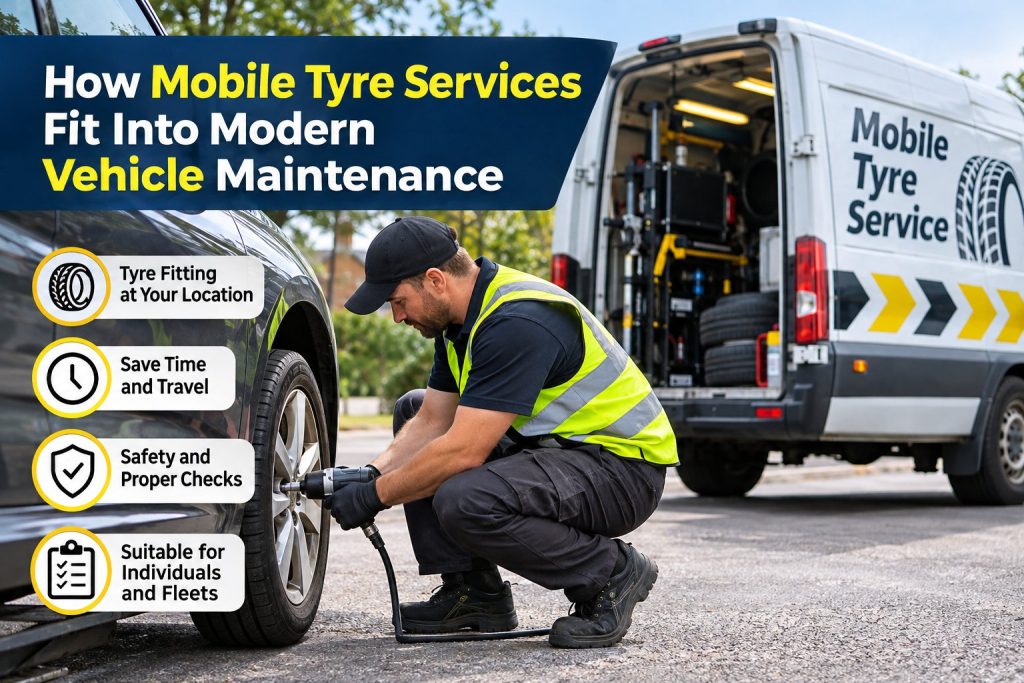
Vehicle maintenance increasingly needs to fit around busy schedules. A driver may have limited time to visit a garage, while a company operating several vehicles may prefer planned appointments at a suitable premises. Mobile tyre services can reduce travel and waiting time in some circumstances, but convenience should never replace the technical and safety checks required for proper fitting.
Drivers considering mobile tyre fitting should check the vehicle’s tyre specification and whether the proposed fitting location is safe. Accurate information at booking helps a technician bring suitable equipment and tyres while avoiding unnecessary delays.
01Local and Practical Considerations for Mobile Tyre Services
A mobile fitter needs appropriate equipment, a safe level working area and accurate information about the vehicle. Tyre size, load and speed ratings should be checked against the vehicle’s requirements. Some wheel and tyre combinations need particular handling, and a mobile appointment may not be suitable if additional workshop diagnostics or repairs are necessary.
02Mobile Tyre Services for Business Fleets
Consider a small business with several vans parked at its depot overnight. Scheduling tyre inspections and replacements at a suitable location may reduce time spent taking individual vehicles to a workshop. The operator should still maintain inspection records and ensure that any tyre faults affecting roadworthiness are addressed before vehicles return to service.
03Check Tyre Size and Ratings
A tyre’s sidewall identifies its size and other specifications, including load and speed ratings. The replacement must meet the vehicle manufacturer’s requirements and applicable rules. Drivers should not assume that every tyre with the same width is interchangeable. The correct combination of dimensions, construction and ratings helps maintain safe handling and load capacity.
04Inspect the Tyre Before Deciding
A tyre can lose pressure because of a puncture, damaged valve or problem with the wheel rim. Cuts, bulges and exposed cords can indicate more serious damage. A professional inspection helps determine whether a repair is possible or replacement is necessary. Driving on a severely underinflated tyre can damage its internal structure even when the outside looks relatively normal.
05Understand Repair Limitations
Not every puncture can be repaired safely. The location and size of the injury, the tyre’s internal condition and whether it has been driven while flat all matter. Sidewall damage and other serious defects commonly rule out repair. A repair decision should follow recognised standards and a suitable inspection rather than a promise based only on a photograph.
06Choose a Safe Working Location
Mobile tyre services require sufficient room around the vehicle and a stable, suitable surface. Busy roadsides, narrow shoulders and other hazardous places may not be appropriate. Where a vehicle is stranded in a dangerous position, roadside assistance or recovery may be necessary. Drivers should prioritise personal safety over trying to arrange the quickest possible fitting.
07What Do Mobile Tyre Services Include?
Ask whether the quoted price covers the tyre, fitting, balancing, valve-related work and disposal of the old tyre. Additional charges may apply depending on the vehicle, wheel size or location. Clear information before booking helps prevent confusion. It is also worth checking what happens if the tyre size provided during booking turns out to be incorrect.
Related reading: How Smart UK Homeowners Are Cutting Car Maintenance Costs Without Cutting Corners.
08Balancing and Wheel Condition
Wheel balancing helps reduce vibration caused by uneven mass distribution in the wheel and tyre assembly. If vibration persists after fitting, the cause may involve wheel damage, alignment or other mechanical components. A tyre replacement alone cannot correct every steering or suspension problem. Report unusual vibration or pulling to a qualified technician.
09Pressure and Monitoring Systems
Correct inflation pressure should follow the vehicle manufacturer’s guidance, with adjustments for load where specified. Some vehicles have tyre-pressure monitoring systems that require a reset or further checks after fitting. A warning light should not simply be ignored. Drivers should understand how to check pressures when tyres are cold and how to respond to repeated pressure loss.
10Tread and Legal Roadworthiness
Tyre tread helps disperse water and maintain grip. In the UK, passenger car tyres generally require at least 1.6 mm of tread across the central three-quarters of the breadth and around the entire circumference. Legal minimums are not a substitute for assessing the tyre’s overall condition. Cuts, bulges and uneven wear can also make a tyre unsafe.
11Consider Weather and Driving Needs
Tyre choice should reflect vehicle requirements, expected weather and driving conditions. Summer, winter and all-season tyres have different design priorities. Mixing unsuitable tyre types or specifications can affect vehicle behaviour. Drivers should follow manufacturer recommendations and seek informed guidance when choosing a replacement for an unusual vehicle or use case.
12Look for Uneven Wear
Wear concentrated on one shoulder or in the centre of the tread can suggest an underlying issue. Incorrect inflation, alignment or suspension faults may contribute. Replacing the worn tyre without investigating the cause can shorten the life of the next one. Regular visual checks help drivers notice changes before they become severe.
13Keep Maintenance Records
Record the date, tyre make and size, fitting location and any advice provided. Fleet operators may need more detailed inspection and maintenance records. Documentation can help with warranty questions and show when tyres were last checked. It also supports planned replacement rather than waiting for a breakdown.
Related reading: Company Car Policies and Fleet Management Considerations.
14Avoid Delaying Safety-Critical Work
A tyre with a bulge, exposed cord or significant pressure loss should be assessed promptly. Continuing to drive can increase the risk of failure. A planned appointment may be suitable for ordinary replacement, but a vehicle that is not roadworthy should not be driven to reach one. Arrange appropriate assistance instead.
15After Fitting
Confirm that the fitted tyre matches the agreed specification and that pressures and any relevant monitoring system have been addressed. Follow the fitter’s guidance on wheel fastener checks where applicable. If new vibration, pulling or pressure loss appears, seek inspection promptly. The fitting appointment should end with clear information about any unresolved concerns.
16Comparing Available Mobile Tyre Services
When researching mobile tyre services St Albans, compare tyre specifications, transparent pricing, appointment conditions and the ability to handle any additional issue discovered during inspection. A convenient booking is useful only when the service can be completed safely and to an appropriate technical standard.
17Choosing the Right Mobile Tyre Services
The practical value of mobile tyre services depends on the right equipment, a suitable location and accurate tyre selection. When those conditions are met, mobile fitting can complement conventional workshops rather than replacing every service a garage provides.
Related reading: Owning a Car Without Breaking the Bank: Smart Ways to Save on Repairs and Insurance.
