A new species of dinosaur discovered at wienerberger’s Ewhurst brick and roof tile works in Surrey has been named in honour of former site manager Will Proudlove, more than 25 years after the fossils were excavated. The news was shared in a release sent on behalf of the company on 28 October.
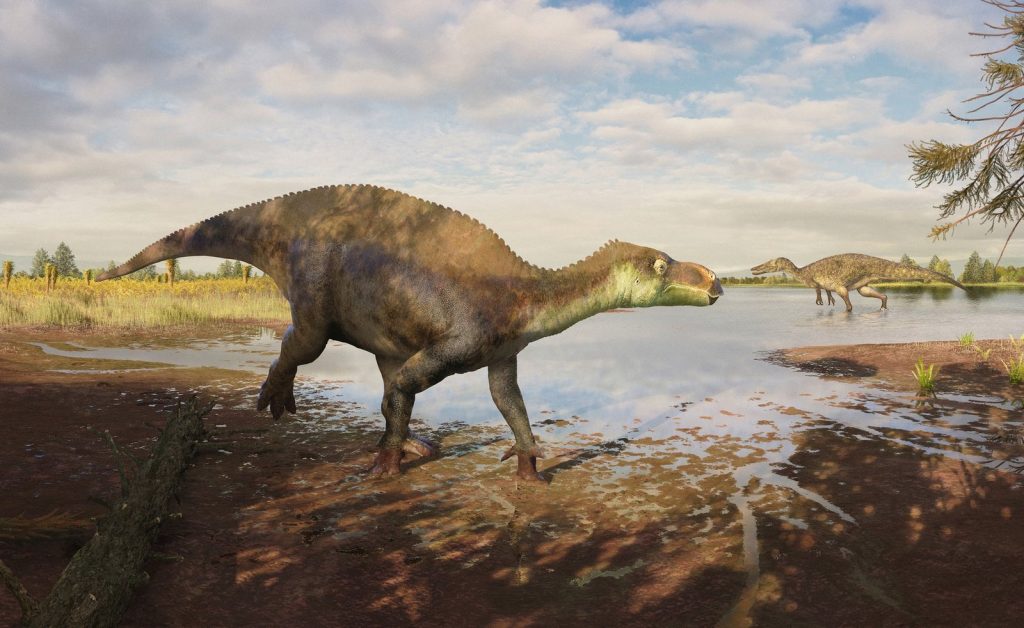
The dinosaur has been named Paludohadros proudlovii. According to the release, the herbivorous animal lived around 125 million years ago during the Early Cretaceous period, when southern England would have been covered in muddy wetlands.
01A name drawn from the swamp, honouring the former site manager
That wetland environment helped to give the dinosaur its name, as ‘palus’ means ‘swamp’ in Latin. Its remains were excavated at the Surrey site in 2001 and have since been studied by scientists at the Natural History Museum, who identified it as a previously unknown genus and species.
The full name honours Will Proudlove, who died aged 35 shortly before the excavation. His family has welcomed the announcement, describing it as an honour that will ensure his name and legacy live on. The company’s PR agency said in October that the story had attracted national news coverage following the museum’s work.
02A site with a palaeontological history
The discovery adds to Ewhurst’s significant palaeontological history. The works was also where the remains of Baryonyx walkeri, a well-known predatory dinosaur, were discovered in 1983. The two dinosaurs lived in the same area around 125 million years ago, and the fossils of Paludohadros were found just 100 metres from those of Baryonyx.
The findings have been published in the Journal of Systematic Palaeontology. The company said they highlight how its Ewhurst works has contributed to our understanding of prehistoric life, with the site’s clay deposits continuing to provide valuable material for scientific research.
03Clay, bricks and science
For the building materials sector, the announcement is a reminder that the clay pits supplying brick and roof tile production can hold scientific value alongside their role in manufacturing. The relationship between construction and the natural world is a recurring theme across the industry, as explored in our feature on building homes and habitats for nature.
Ewhurst’s contribution to palaeontology now spans two named dinosaur discoveries, with the newly identified Paludohadros proudlovii joining Baryonyx walkeri in the site’s record. More than 25 years after the excavation, the name of the former site manager is now attached to a species that lived in the area around 125 million years ago.
Details and image via wienerberger.