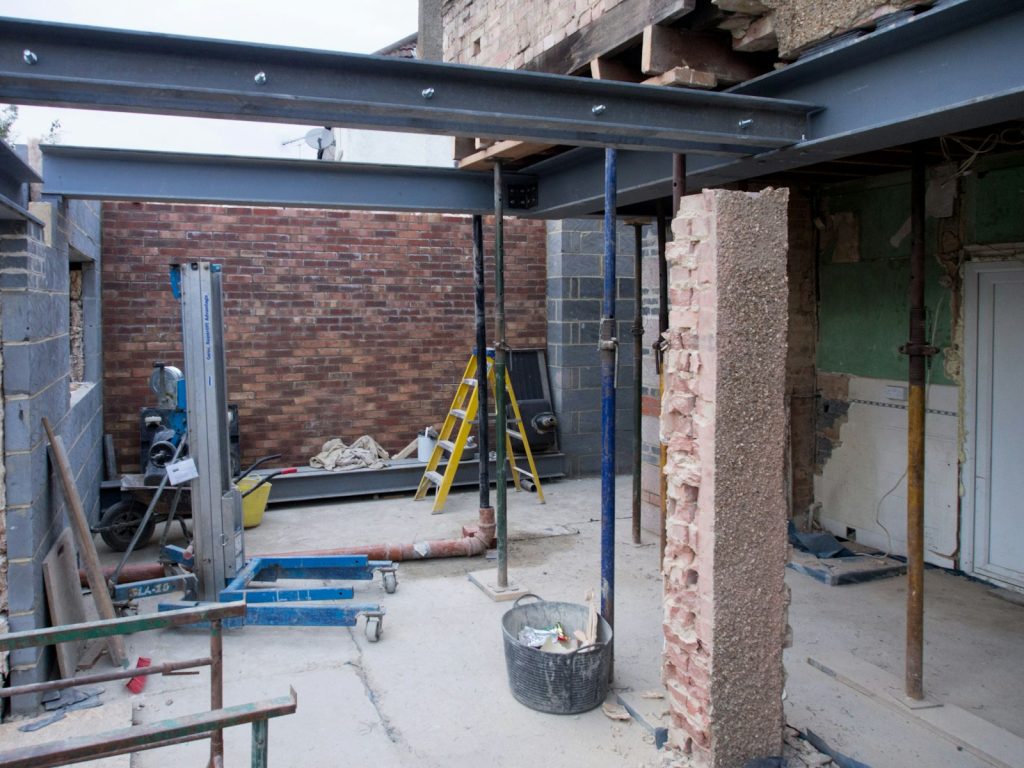
You need building regulations approval in England for new buildings, extensions and many alterations, such as replacing a fuse box, adding a bathroom with new plumbing, replacing windows or installing a heating system. You get it from your council’s building control team, a registered building control approver or, for some jobs, an installer registered with a competent person scheme.
This guide covers England and is based on GOV.UK, the Planning Portal and council building control guidance, all checked 12 November 2026. Wales, Scotland and Northern Ireland have their own systems, covered at the end.
01What is the difference between building regulations and planning permission?
Planning permission decides whether a development can go ahead in the first place. Building regulations set the standards for how the work itself is designed and built; the Planning Portal’s extension guidance, for example, covers foundations, ventilation, energy efficiency and structural openings.
GOV.UK’s building regulations approval guide says “Building regulations approval is different from planning permission”, and you might need both. A project that does not need planning permission can still need building regulations approval; see our guide to permitted development rights for the planning side.
| Planning permission | Building regulations approval | |
|---|---|---|
| What it controls | Whether a development can go ahead | How the work is designed and built |
| Who decides | Your local planning authority | A building control body: the council, a registered building control approver or, for higher risk buildings, the Building Safety Regulator |
| Exceptions | Permitted development | Exempt work and competent person schemes |
| If you skip it | You can be served an enforcement notice | You may have to correct the work or pay a fine |
02What work needs building regulations approval?
GOV.UK says the Building Regulations 2010 cover the construction and extension of buildings, and that you might also need approval for many alteration projects. Its examples include:
- replacing fuse boxes and connected electrics;
- installing a bathroom that involves plumbing;
- fitting a fixed air conditioning system;
- replacing windows, doors or roof coverings;
- installing or changing a heating system.
You do not need approval in advance for emergency boiler repairs, but you must still follow the rules. If you are unsure, check with a building control body before you start. Our bathroom renovation cost guide and house renovation order guide can help you plan the sequence of work.
03What work doesn’t need building regulations approval?
GOV.UK’s page on when you do not need approval lists:
- most repairs, replacements and maintenance, except heating systems, oil tanks, fuse boxes and glazing units;
- new power and lighting points, or changes to existing circuits, except around baths and showers;
- replacing baths, toilets, basins and sinks;
- installing insulation in roof spaces or under timber floors;
- gutters and downpipes;
- external doors where less than half the door is glazed.
Even then, GOV.UK says “You must meet safety and energy efficiency standards.”
04How do you get building regulations approval?
There are three types of application. The right one depends on the size of the job and whether the work has already been done.
| Route | Suited to | How it works | What you get |
|---|---|---|---|
| Full plans | Larger or more complex work | Plans are checked before work starts; a decision within 5 weeks, or 2 months with your consent | An approval notice valid for 3 years, then a completion certificate |
| Building notice | Smaller projects | No plans needed upfront; work can start 2 days after you submit; inspected as it goes | No formal approval; a completion certificate on satisfactory completion |
| Regularisation | Work already done without approval | A retrospective application to the local authority | A regularisation certificate once compliance is shown |
Full plans
The Planning Portal’s full plans guidance says this route lets the authority check and approve work before it starts. GOV.UK’s how to apply page says to expect a decision within 5 weeks, or 2 months with your consent.
A conditional approval may be issued if changes or more information are needed. Approval is valid for three years from the date the plans were deposited, and GOV.UK says you will usually get a completion certificate within 8 weeks of finishing, as long as the work complies.
Building notice
GOV.UK says this route “is only for smaller projects”. The Planning Portal’s building notice guidance says plans are not needed upfront, although the authority may ask for structural calculations or drawings later, and you can start 2 days after submitting the notice.
There is no formal approval, so you “risk having to correct any work you carry out” if it does not comply. A building notice is valid for three years.
Regularisation
Regularisation is a retrospective application for work done without building regulations consent. The Planning Portal says it covers work started on or after 11 November 1985, and that exposing, removing or fixing work may be needed to show it complies.
GOV.UK says regularisation is only available from a local authority building control body.
05Should I use the council or a registered building control approver?
For most work you can choose between your council’s building control department and a private registered building control approver. If you use an approver, GOV.UK says “they’ll tell your local authority about your work”, which is called an initial notice.
| Local authority building control | Registered building control approver | |
|---|---|---|
| Who they are | Your council’s building control team | A private business registered to carry out building control |
| Fees | Based on the council’s costs, the type of work and floor area | Negotiated directly with you |
| Regularisation | Yes | No |
| Higher risk buildings | No, the Building Safety Regulator handles these | No |
Building control became a registered profession on 6 April 2024, according to a government circular letter dated 1 February 2024, and approved inspectors had to register as building control approvers by that date. You can find your council’s team with the Planning Portal’s find your building control authority tool.
06What is a competent person scheme?
Competent person schemes let tradespeople show they can do certain work to the required standards, so you do not have to apply for approval yourself. GOV.UK’s competent person scheme guidance gives window and boiler installers and electricians as examples.
A registered installer can self certify the work, tell your local authority on your behalf where needed, and give you a certificate within 8 weeks of completion. GOV.UK says that certificate will also appear in solicitors’ searches if you sell your home.
Check registration before work starts on the Competent Persons Register or, for electricians, the Electrical Competent Person Register. If the installer is not registered, you will need to go through a building control body instead.
07What is a completion certificate and why does it matter when you sell?
A completion certificate is issued by your building control body once the work has been inspected and found to comply. North Yorkshire Council’s completion certificate guidance says it “gives reassurance that works carried out, to our knowledge, are in compliance with the building regulations”.
The same council says a certificate “can provide peace of mind and aid the conveyance process”. GOV.UK also notes that competent person certificates appear in solicitors’ searches when you sell, so keep every completion and competent person certificate with your property documents.
If a certificate is missing, contact the council or approver that oversaw the work. If the work was never signed off, regularisation may be an option, and your conveyancer can advise on how it affects your sale.
08What changed for higher risk buildings under the Building Safety Act?
The Building Safety Act 2022 created a separate, stricter regime for higher risk buildings in England. GOV.UK’s guidance for higher risk buildings, last updated on 1 October 2026, defines these as buildings at least 18 metres high or with at least 7 storeys that have at least 2 residential units, or are a hospital or care home.
Since 1 October 2023, the Building Safety Regulator has been the building control authority for these buildings, according to the government’s circular letter. You need its approval before starting new higher risk building work or certain work on existing ones; starting without approval is a criminal offence, and approval lapses if work has not commenced within 3 years.
The circular letter also says new dutyholder duties apply to all building work from 1 October 2023, and that registered approvers cannot oversee higher risk building work. For developers, our guide to the Building Safety Levy in 2026 and our building regulations guide for property investors go further.
09What happens if you don’t get building regulations approval?
GOV.UK says you “may have to correct the work or pay a fine if building regulations are not followed”. If work has already been done without approval, a regularisation application to your council is the usual route, and you may need to make changes before a certificate is issued.
Your local building control team can tell you which route fits your project. Talk to them before you start, not after.
10Are building regulations different in Wales, Scotland and Northern Ireland?
Yes. Wales has its own building regulations, set out on the Welsh Government’s building regulations page. Scotland runs a separate building standards system, and Northern Ireland has its own building regulations, both linked from GOV.UK.
The higher risk building regime and the registered approver rules described above apply in England. Wherever you are, check with your local building control authority before work starts. If your project involves a shared wall, read our guide to party wall agreements too.